

Under The Radar
About
We speak with businesses, industry leaders, venture capitalists and startups on their assessment of the business environment they're in, and what the future holds for them.
FEB 22, 2024
22/02/24 - Under the Radar: How did the creators of the world's first dog bed snag investments from Shark Tank's Mark Cuban and Lori Greiner?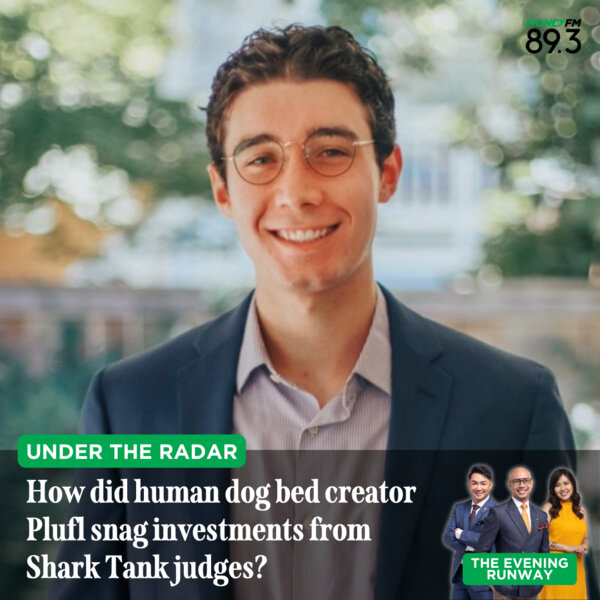
Have you ever seen a dog tucked in his or her dog bed and napping so well that made you go “I wish I could be like him or her?”
Well, that could soon become reality for you, with one startup in the US building and selling what they call the world’s first dog bed, but for humans!
Founded in 2021, Plufl was started by two college students at the University of British Columbia when they were craving a nap after a long and exhausting day.
In fact, the two founders’ light bulb moment came when they spotted a Great Dane napping blissfully in the biggest dog bed they had ever seen.
But before you go, “does such a value proposition even work”? It does seem like that’s the case from what we’ve seen so far.
Just to illustrate, the co-founders launched a Kickstarter campaign in March 2022 to raise funds to produce their initial batch of human dog beds, after their TikTok videos gained attention among the social media community.
Half a year later, the firm managed to raise nearly $725,000 through its Kickstarter and IndieGogo campaigns.
What is even more interesting is that the firm managed to snag $200,000 in investments from Shark Tank judges Lori Greiner and Mark Cuban, for a 20 per cent stake in the company, in an episode aired in October 2022.
So what is Plufl’s business model exactly? What do profit margins look like and what is it about Plufl that allowed them to secure funds from the “sharks”?
Also – what is the strategic value brought about by having Lori Greiner onboard given her network in the QVC world?
On Under the Radar, The Evening Runway’s finance presenter Chua Tian Tian posed these questions to Noah Silverman, Co-founder, Plufl.
|


|


|
|
15:40
|


FEB 21, 2024
21/02/24 - Under the Radar: How important are strategic partnerships to affiliate marketing and fintech firm Fave?
Put fintech, payments and affiliate marketing together – and you get a company called Fave.
Founded in 2015, Fave prides itself as Southeast Asia’s fastest growing platform that allows users to pay using QR codes and receive cashbacks on their digital transactions.
The firm also enables users to buy and redeem restaurant deals, spa, massage, travel and activity offers using its apps. It even provides eCards to customers to save on their purchases.
So far, the firm operates in 35 cities across Malaysia, Singapore and India with over 40,000 retailers and merchants and 20 million annual transactions.
But which is the most important revenue stream and geographical market for the Fave where money is concerned?
And with Southeast Asia’s digital economy tipped to see gross merchandise value hit US$1 trillion by 2030, what opportunities lie ahead of the firm?
Meanwhile, Fave is also seeing a number of exciting developments. For instance, Fave had in November last year said it was taking part in the Singapore Quick Response Code+ or SGQR+ POC (proof of concept) led by the Monetary Authority of Singapore.
The initiative aims to enhance interoperability between merchants and QR payment apps. But what does Fave’s participation mean when it comes to the dollars and cents?
On Under the Radar, The Evening Runway’s finance presenter Chua Tian Tian posed these questions to Hayley Pang, Head of Strategic Partnerships, Fave.
|
|
|
|
|
23:31
|
FEB 20, 2024
20/02/24 - Under the Radar: What are the opportunities for startup venture Silicon Box as chiplet adoption rises?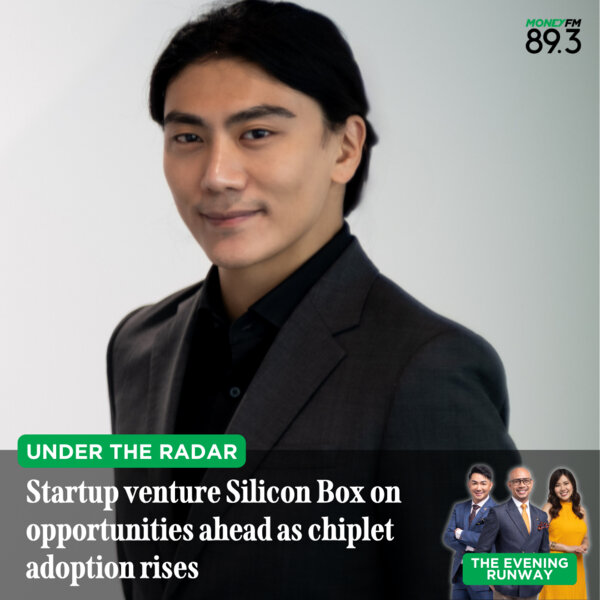
Semiconductors have been the talk of the town for the past two years, have you heard of a new type of chip called chiplets?
Think of it this way. According to IBM Research, computer chips today are made using a technique called systems on a chip or SOC, where multiple computer functions such as general processing, data storage are put into a single chip.
While this way of building chips has worked well in the past, every chip comes with multiple functions, some of which that the customer may or may not need.
This means that it is not efficient to use such chips for high performance tasks such as AI computing or big data processing.
So what the chiplet technology does is to break apart the system into its composite function parts. These individual parts are called chiplets.
Chiplets could be mixed and matched on a module to then create chips with more efficient and specific functions, just like Lego blocks. They are in fact increasingly adopted by big tech firms such as Apple and AMD.
But why are we talking so much about chiplets today? Well, that’s because our guest is startup venture Silicon Box, which focuses on the semiconductor design of chiplets.
Started in 2021 by the founders of NASDAQ-listed chipmaker Marvell, the firm raised US$200 million in a Series B round this year. The firm said its valuation surpassed the US$1 billion mark, making it a unicorn less than three years after founding.
But how does the firm assess its valuation numbers and what are the key drivers of growth in the chiplets space?
Meanwhile, SiliconBox opened a US$2 billion facility in Tampines in July last year but what is the role of Singapore in its wider portfolio?
On Under the Radar, The Evening Runway’s finance presenter Chua Tian Tian posed these questions to Mike Han, Head of Business, Silicon Box.
|
|
|
|
|
16:28
|
FEB 19, 2024
19/02/24 - Under the Radar: Scaffolds for bone regeneration – ASX listed Osteopore on being included by South Africa’s insurance scheme and deal with Temasek-linked InnoVentures to commercialise products in China
Today we’re going to talk about a company that makes scaffolds – not for buildings, but scaffolds that can be implanted into the human body for bones and tissues to grow.
Started in 1992, our guest is Osteopore, an Australian and Singapore based medical technology company commercialising a range of products specifically engineered to facilitate natural bone healing across multiple therapeutic areas.
One of the firm’s products included the Osteomesh, which is a mesh-like polymer scaffold that can be implanted into patients’ skulls to help them regenerate bone tissues that were taken out in surgical procedures.
Other products include those that can be used for rhinoplasty or a nose implant surgery, as well as those that can be used for jaw surgeries to help people eat and speak normally after injuries.
The firm was listed on the Australian Securities Exchange in September 2019 and had achieved a milestone of 80,000 implants across all major continents in 2022.
But how does Osteopore commercialise its products, and are its patients using its implants also its customers? How does it then assess its relationship with insurers?
Speaking of insurers, Osteopore announced in May last year that the most prominent medical scheme in South Africa, the Discovery Health Medical Scheme (DHMS) has approved the reimbursement of its Osteomesh product. But how big is the South African market to Osteopore and how important is this to the firm’s top and bottom lines?
Meanwhile, the firm had in September 2023 signed an agreement with Temasek-linked InnoVentures to commercialise Osteopore’s orthopaedic products in China, but how much money does this represent for the company?
On Under the Radar, The Evening Runway’s finance presenter Chua Tian Tian posed these questions to Dr Lim Jing, Chief Executive Officer and Chief Technology Officer at Osteopore.
|
|
|
|
|
18:28
|
FEB 15, 2024
15/02/24 - Under the Radar: Behind your salmon and trouts - an inside look into Danish aquaculture engineering firm Assentoft Aqua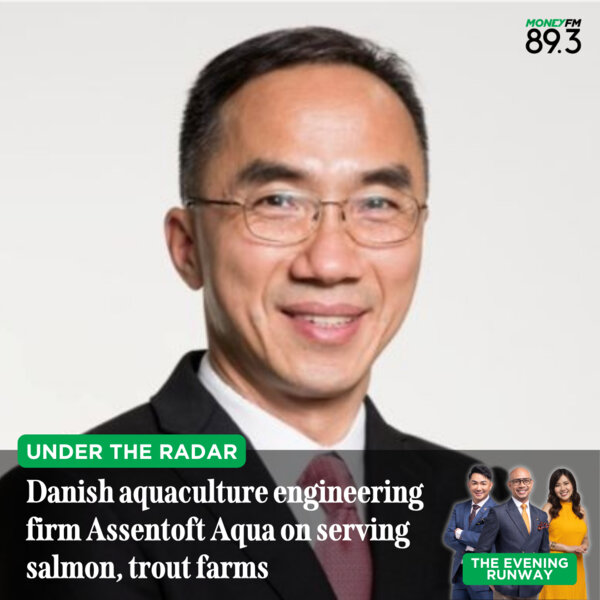
It’s all about salmon and trout today as we talk to one of the suppliers of land-based fish farming facilities.
Founded in 2017, Assentoft Aqua is a Danish aquaculture engineering company.
It provides fish farmers with what’s known as RAS or Recirculatory Aquaculture Systems that save space, pipes and minimises carbon footprint and the amount of investment needed per produced ton of fish.
The firm has worked on about ten projects in Denmark, Norway, Canada, Ireland and Poland since the business started about seven years ago, with an annual production capacity of about 400 tonnes each.
Assentoft Aqua set foot in Singapore in July 2020, and was also behind a US$33m high-tech trout farm in Neo Tiew that could produce about 1,200 tonnes of rainbow trout every year. That’s about 25% of local farmed fish production in 2022.
But why did the firm decide to move into a relatively smaller market in Singapore, given how it was previously focusing on European and Nordic markets?
Meanwhile, with food supply chain resiliency thrust into the spotlight amid the pandemic, and countries around the world focusing on self-sufficiency, what does that mean for Assentoft when it comes to demand for modern farming facilities and systems?
On Under the Radar, The Evening Runway’s finance presenter Chua Tian Tian posed these questions to Matthew Tan, Chief Executive Officer, Assentoft Aqua Asia.
|
|
|
|
|
19:53
|
FEB 14, 2024
14/02/24 - Under the Radar: Everything, everywhere all at once - BreadTalk unveils grand plan post delisting, sale of HQ to Lian Beng, new concepts and expansion plans
Today we’re going to talk about a company that you would have come in contact with on a day to day basis. Make a guess – this is a company that started as a bakery brand making pork floss buns.
Bingo if you’ve guessed Breadtalk. Founded in 2000, Breadtalk Group is now an F&B group with multiple concepts ranging from bakeries, restaurants and even food atriums.
With close to 700 retail stores spread across 16 markets in Asia, the Middle East and the United Kingdom, the company’s portfolio comprises direct owned brands such as BreadTalk, ToastBox, Food Republic, So Ramen and Thye Moh Chan.
The company also counts Din Tai Fung, Song Fa Bak Kut Teh and Wu Pao Chun Bakery as its partner brands. But why are we talking about a brand that most of us would know of? Well, the past four or five years have been full of changes for BreadTalk.
In 2019, the Group bought over food court operator Food Junction in a deal worth S$80 million to obtain additional revenue streams.
And in 2020, the firm’s founder George Quek offered to take the then SGX-listed firm private. It was also that year that the firm cut salaries temporarily amid the COVID-19 pandemic.
A year later, a consortium led by mainboard-listed Lian Beng Group bought over BreadTalk’s IHQ Building in Tai Seng in a S$118 million sale and leaseback deal.
Meanwhile, the firm also came up with new concepts like Tau Sar Piah brand Thye Moh Chan and First Street Teochew Fish Soup. It even unveiled a Toast Box Coffee House in Tiong Bahru last year.
It seems like there are many moving parts for the firm all happening within the past few years. But what were the reasons behind each of the moves, and how did the firm take the time to reconfigure its business and develop new revenue streams for the future?
On Under the Radar, The Evening Runway’s finance presenter Chua Tian Tian posed these questions to Hoo Hoe Keat, Chief Business Officer, BreadTalk Group.
|
|
|
|
|
26:17
|
FEB 13, 2024
13/02/24 - Under the Radar: STACS on integrating ESG data and helping firms tap green financing, working with the MAS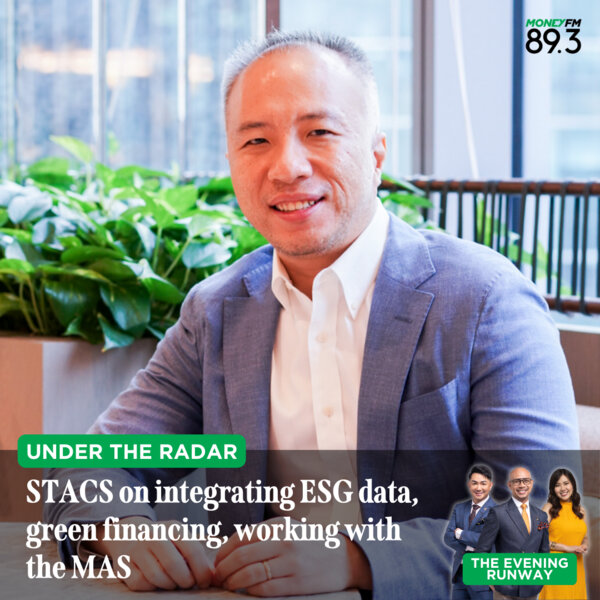
It’s all about helping smaller companies gain access to green financing today.
While companies may think that they need to collect vast amounts of data to track sustainability goals, the fact is that a bulk of that required may have already been tracked in their day-to-day processes.
This can be data on their electricity consumption, or carbon emissions, collected automatically through the firm’s existing fleet management or building management systems.
But how should firms go about extracting and making use of that data to obtain more capital?
Well, that’s the work of our guest STACS. Founded in 2019, Stacs is Asia’s leading ESG data and technology company.
It collates information from companies’ day-to-day operations as well as data providers like Refinitiv, and presents them in a user-friendly interface to help financiers better understand where the firm is at when it comes to meeting ESG goals.
For STACS, its interface is called the ESGpedia. Named after “Wiki-pedia”, the AI-enabled platform powers a number of sustainability related initiatives, including the Monetary Authority of Singapore’s Greenprint ESG Registry.
Currently, the platform covers over five million sustainability disclosure data points, with more than 180,000 companies’ sustainability data. This allows banks and corporates to access accurate, consistent and comparable data on one registry for financing purposes.
But how does it work exactly and how does STACS monetise its platform? Also – how much money is up for grabs for STACs in the near term?
On Under the Radar, The Evening Runway’s finance presenter Chua Tian Tian posed these questions to Benjamin Soh, Managing Director, STACS.
|
|
|
|
|
23:04
|
FEB 8, 2024
08/02/24 - Under the Radar: How far is a "Swiss Utilitarian" positioning strategy working for Bally as it cuts its teeth in fashion?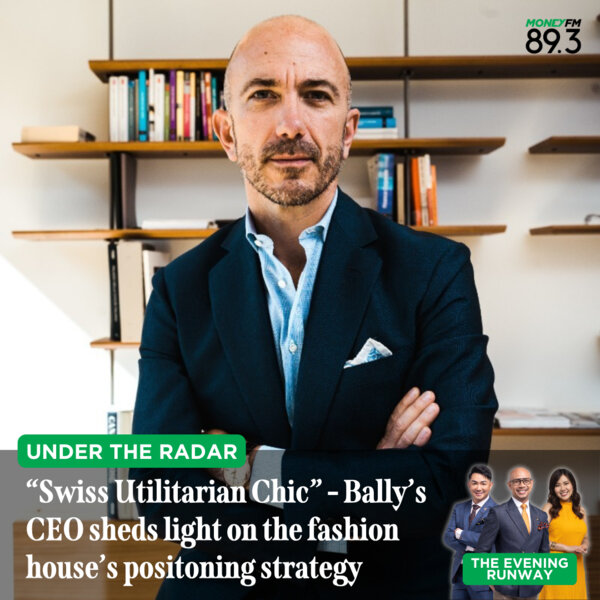
Today we’re going to bring you an inside look into a luxury brand called Bally. This is a brand that many may have heard about but yet not exactly know about.
Some might think of Bally as a company with a rich heritage in shoemaking, but it was actually founded in 1851 as a family run ribbon factory, three years before Louis Vuitton was born.
The firm expanded rapidly as it industrialised its processes in 1854, and set up stores in Montevideo, Uruguay Paris and France. Today, Bally offers unique designs across shoes, accessories and ready-to-wear, driven by a dedication to craftsmanship and a contemporary aesthetic.
The company has a distribution network of over 320 retail stores and 500 multi-brand points of sale spanning across 60 countries worldwide, including a global e-commerce platform serving 58 countries.
Why are we talking about Bally you might ask? Well, the past five years or so have been a roller coaster ride, after a sale agreement in 2018 to Chinese textile company Shandong Ruyi fell through.
At that time, the brand is also one where people know, but yet are not compelled to purchase from, which meant challenges on top and bottom lines.
All of that meant a change in strategy for the firm’s management, which took the chance to reassess its positioning in the luxury wear industry and to transform the shoemaker into a luxury fashion powerhouse focusing on its Swiss utilitarian chic designs.
For one thing, the firm cut its teeth in clothings and had in September last year staged a joint fashion show in Milan with a new creative director.
The show was a hit and drew positive responses at a time when Gucci and Tom Ford – which by the way also had new creative directors lead their show – drew mixed responses. So how has a “Swiss Utilitarian” positioning strategy for Bally worked as it expands beyond shoes? What does it mean where money is concerned?
On Under the Radar, The Evening Runway’s finance presenter Chua Tian Tian posed these questions to Nicolas Girotto, CEO, Bally.
|
|
|
|
|
27:55
|
FEB 7, 2024
07/02/24 - Under the Radar: DocuSign on resumption of in-person meetings and impact on finances; potential leveraged buyout by Bain Capital and Hellman & Friedman
Today we’re going to talk about a company whose products and services are used by over 1.4 million customers and over a billion users in more than180 countries.
Make a guess – how does eSignature company DocuSign sound? Founded in 2003, DocuSign is a pioneer of electronic signatures and helps businesses automate how they prepare, sign, act on and manage agreements. Put simply, it is a tech firm that allows users to digitally sign in a secure manner.
DocuSign’s platforms currently have over 400 pre-built integrations with popular business applications, and is also able to seamlessly connect with customers’ websites, mobile apps and custom workflows.
The firm sees millions of transactions a day and counts some of the biggest corporations as its customers – with Singtel, CapitaLand, Canva, Tokopedia and Guzman Y Gomez among those using its services.
In particular, it saw a boom in demand over the pandemic as businesses shifted their operations online. But with the resumption of in-person meetings post-pandemic, what will this mean for DocuSign when it comes down to finances?
Speaking of the future, the firm is doubling down on innovation. One of its most recent features allows users to send real-time notifications on WhatsApp that directly link to agreements to enable quick and secure signing. But how crucial is innovation to top and bottom lines for DocuSign?
Meanwhile, - Reuters reported in January that Bain Capital and Hellman & Friedman are competing to acquire the firm with a market value of about US$12.5 billion. But what can we expect on this front?
On Under the Radar, The Evening Runway’s finance presenter Chua Tian Tian posed these questions to Shaun McLagan, Group VP and General Manager for APJ, DocuSign.
|
|
|
|
|
24:46
|
FEB 6, 2024
06/02/24 - Under the Radar: A stock market, but for sneakers – StockX on its dynamic pricing mechanism, navigating its relationship with brands; plans for an IPO
The market for hard-to-find fashion and electronics is heating up with Gen Z and millennials consumers increasingly valuing self-expression and individuality.
And one way for consumers to purchase these rare items is through the secondary market and in particular through e-commerce platforms.
But in a situation where the supply is limited and demand is high, how do consumers determine what is a fair price to pay for the items, and if the product they purchased is authentic?
Well, that’s exactly the work of our guest for today, StockX. Founded in 2016 in Detroit, StockX is a global platform for trading and consuming current culture.
It provides access to high-demand products like sneakers, shoes, apparel, electronics and collectibles that are often unavailable at traditional retailers.
For one thing, its product catalogue consists of over 200,000 products from hundreds of brands including Jordan Brand, adidas, Nike, Supreme, Off-White and Louis Vuitton.
The marketplace also connects buyers and sellers using dynamic pricing mechanics, just like the stock market, allowing users to buy and sell their most coveted items at their true market price. All products sold via the platform will also need to be sent to StockX to be verified for their authenticity and quality before payment is released to sellers.
So far, the firm said it has facilitated over 50 million lifetime trades with an average of 30 million visitors to its platform every month in the year of 2023. Also – which are the top traded and fastest growing brands, and how does the firm navigate its relationships with these brands?
In terms of corporate developments, the company’s valuation jumped to US$3.8 billion in April 2021 after it closed a US$195 million secondary tender offering and an additional US$60 Series E-1 primary shares.
But how is valuation looking like three years down the road, and any IPO plans for private investors to cash out?
On Under the Radar, The Evening Runway’s finance presenter Chua Tian Tian posed these questions to Greg Schwartz, President & Chief Operating Officer, StockX.
|
|
|
|
|
24:05
|


