

Under The Radar
About
We speak with businesses, industry leaders, venture capitalists and startups on their assessment of the business environment they're in, and what the future holds for them.
NOV 28, 2024
28/11/24 - Under the Radar: Ninja Van’s CEO on moving into B2B delivery and cold chain businesses, challenges in operating within the logistics industry now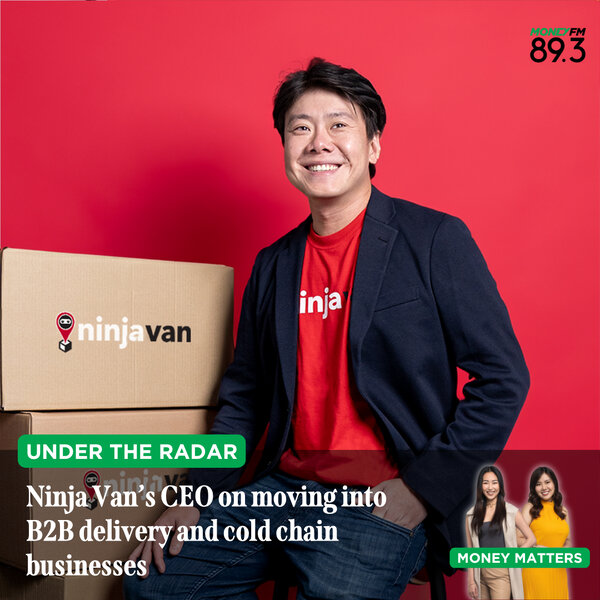
Today we’re going to talk about a logistics company that started out of a second hand van a decade ago.
Founded in 2014 by a group of three friends, our guest is e-commerce express logistics company Ninja Van Group. Fast forward to the present, the firm is now a technology enabled logistics organisation backed by marquee investors including GeoPost, Alibaba, and B Capital Group.
Just to give you a sense of the firm’s scale, Ninja Van said it has a 100% coverage across Southeast Asia, with established operations and networks in six key markets.
It offers logistics and supply chain products and services for nearly two million shippers, with some two million parcels delivered by its team of over 66,000 people daily.
Ninja Van is a company that we want to look at because the firm had in April 2024 launched a cold chain offering called Ninja Cold, as well as a business-to-business offering Ninja B2B, as part of efforts to diversify beyond e-commerce and search for higher margin businesses.
The move come as the firm’s latest financial filings for the financial year ended June 2023 revealed a loss of S$326.8 million in 2023 versus a loss of S$250.2 million in 2022.
So how does the firm assess its latest financial numbers? What does this say about the opportunities and challenges in operating and expanding within the logistics space?
And how successful has Ninja Cold and Ninja B2B been over half a year after they were launched?
On Under the Radar, Money Matters’ finance presenter Chua Tian Tian posed these questions to Lai Chang Wen, CEO, Ninja Van.
|


|


|
|
30:49
|


NOV 22, 2024
22/11/24 - Under the Radar: In the business of love – Match Group Asia’s CEO on what success means for the firm and helping people tie the knot in Japan
It is all about the business of love today as we speak to a leading provider of digital technologies designed to help people make meaningful connections.
Founded 25 years ago, our guest today is Match group, which pioneered the concept of online dating and continues to foster innovation in the dating industry daily.
The firm boasts a portfolio of brands and is more commonly known as the company behind Tinder, Match and Pairs, providing matching services in over 40 languages to users all over the world.
Today, Match Group has a footprint in 20 offices worldwide, hiring some 2,000 employees. Here in Asia, it is headquartered in Singapore, with its regional team spread across markets including Japan, South Korea, Australia, India, Vietnam and Thailand.
The company recently reported its third quarter financial performance, where its operating income stood at US$211 million, down 14 per cent on the year impacted by impairments of tangibles and other charges relating to its exit from Hakuna and other live streaming services. But what were the reasons behind the exit, and how is its Asia business faring on the whole?
Speaking of Match Group’s Asia business, the firm is largely zoomed in on the Japanese market through its dating and marriage app called “Pairs”.
With a total of over 20 million registered users, Pairs is said to have facilitated every one in 10 marriages in Japan. But what are the key learnings from Pair’s operations in Japan, and how far can the operating model in Japan be replicated in other Asian markets with lower marriage rates?
On Under the Radar, Money Matters’ finance presenter Chua Tian Tian posed these questions to Malgosia Green, CEO of Match Group Asia.
|
|
|
|
|
25:44
|
NOV 21, 2024
21/11/24 - Under the Radar: NCS NEXT on transformation and how generative AI would reshape the focus of its earlier strategic reset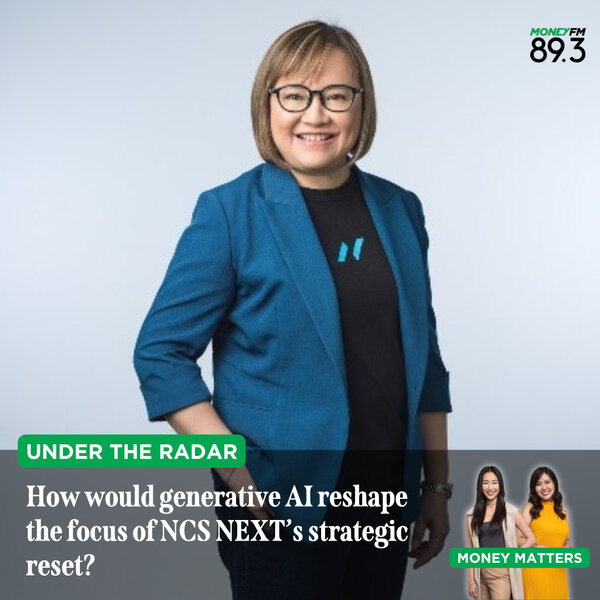
Opening new frontiers in information technology and pioneering the future of innovation. That is what we are going to talk about today with our guest from a leading technology services firm in Asia Pacific.
Founded in 1981, NCS is a subsidiary of Singtel Group that provides what it calls differentiated and end-to-end services to clients with its capabilities in core areas such as application, infrastructure, engineering and cybersecurity.
The firm partners with governments and enterprises across industries such as hospitality, manufacturing, logistics and even healthcare to advance communities through technology.
Such technologies include the Breeze app, which utilises computer vision and artificial intelligence to help users get around local neighbourhoods such as Tiong Bahru more easily.
Why are we speaking to NCS you might ask? Well, we’re speaking to NCS because the firm is currently doubling down on innovation in emerging areas such as digital, data, cloud and platform through its digital services arm NEXT.
That’s after the company had in July 2021 announced a major business transformation to reposition it for growth in the 5G era.
The strategic reset then focused on growing digital services, scaling its government and telco business segment and capturing new growth opportunities in the enterprise sector across key regional markets of Singapore, Australia and Greater China.
But what has been done thus far and how important is NCS NEXT to the firm alongside its other strategic business groups? And what will the rapid adoption of generative AI mean for the firm as it looks to the second half of the decade?
On Under the Radar, Money Matters’ finance presenter Chua Tian Tian posed these questions to Wynthia Goh, Senior Partner, NCS NEXT.
|
|
|
|
|
26:46
|
NOV 14, 2024
14/11/24 - [SFF 2024 Special] Panel on Bridging the Financial Gap with ANEXT Bank and Triple-A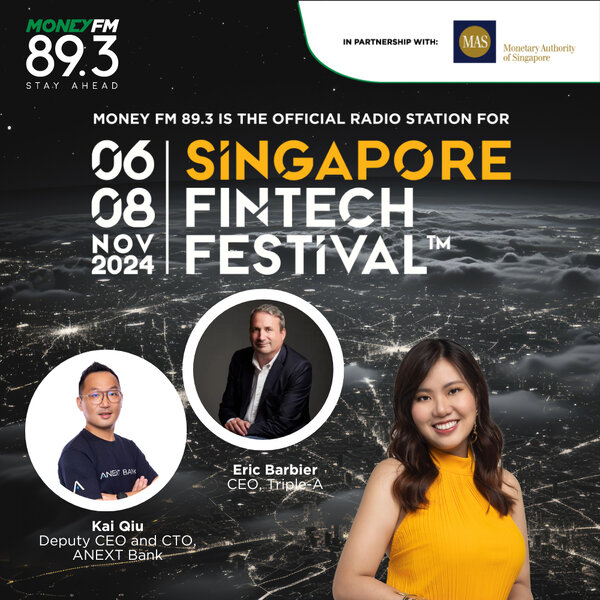
This year’s Singapore Fintech Festival surrounds six major themes that will frame 2025.
One of the themes among industry leaders, in particular, is the need to bridge the financial gap and ensure equitable access and usage of financial services and products to the underserved.
On this note, did you know that 1.4 billion people globally still lack access to bank accounts? Yes, and that is according to an article published on the World Economic Forum in just September this year.
So what can we then do to level the playing field for the underbanked and underserved – both individuals and budding entrepreneurs who are starting out?
Well, the numbers appear to point to fintech as the answer, given increased internet adoption and digitalisation.
In this panel discussion on "Bridging the Financial Gap", we talked about the challenges individuals as well as Micro, Small and Medium-sized Enterprises faced in accessing traditional financial services and how the use of digital banking and digital tokens can level the playing field for the underserved.
We also looked at the metrics used to determine progress towards equitable financial outcomes and identify areas for further intervention, and the need to ensure that digital technologies continue to narrow and not widen the wealth gap.
As part of MONEY FM’s on the ground coverage of Singapore Fintech Festival 2024, Money Matters’ Finance Presenter Chua Tian Tian spoke with Kai Qiu, Deputy CEO and CTO, ANEXT Bank and Eric Barbier, CEO, Triple-A for more.
|
|
|
|
|
22:57
|
NOV 14, 2024
14/11/24 - [SFF 2024 Special] Wrap of SFF Announcements with Deloitte and GoImpact Capital Partners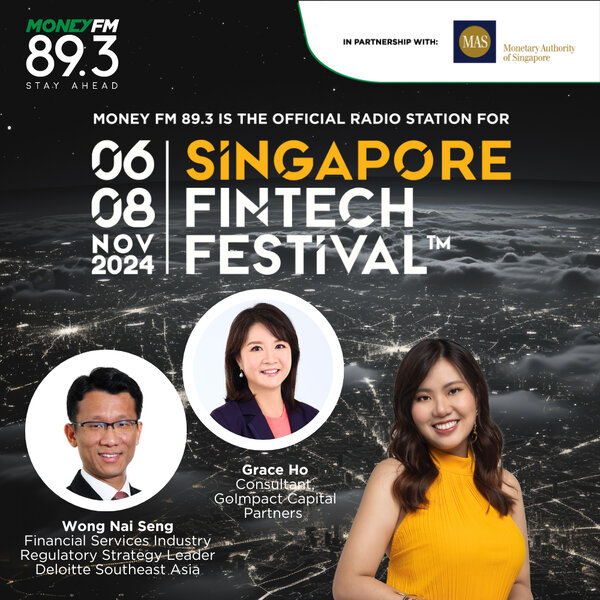
We want to give you a quick wrap of some of the announcements made at the Singapore Fintech Festival 2024, as well as the implications of the developments on the fintech industry.
One of the biggest announcements released ahead of SFF 2024 was how the Monetary Authority of Singapore set up the Global Finance & Technology Network or GFTN to further strengthen Singapore as a global FinTech hub and enhance global connectivity for impactful innovation in financial services.
The GFTN will catalyse the growth of the Singapore FinTech ecosystem and drive greater synergies and networks with the global FinTech community.
In particular, the MAS has said that the GFTN will work with the central bank to advance industry and policy dialogues in payments, asset tokenisation, AI as well as quantum technologies. It will also support the MAS’ efforts to grow a vibrant FinTech ecosystem, and scale SFF as the premier global FinTech event.
But speaking of driving synergies and advancing dialogues in emerging FinTech trends, we’ve also seen a number of private sector announcements by companies within the industry as well.
As part of MONEY FM’s on the ground coverage of Singapore Fintech Festival 2024, Money Matters’ Finance Presenter Chua Tian Tian unpacked the developments with Wong Nai Seng, Financial Services Industry Regulatory Strategy Leader, Deloitte Southeast Asia and Grace Ho, Chief Commercial Officer, GoImpact Capital Partners.
|
|
|
|
|
16:48
|
NOV 14, 2024
14/11/24 - [SFF 2024 Special] Angel Investing in FinTech with Fintech Executive Ee Chien Chua and Fintech Nation’s Vanessa Ho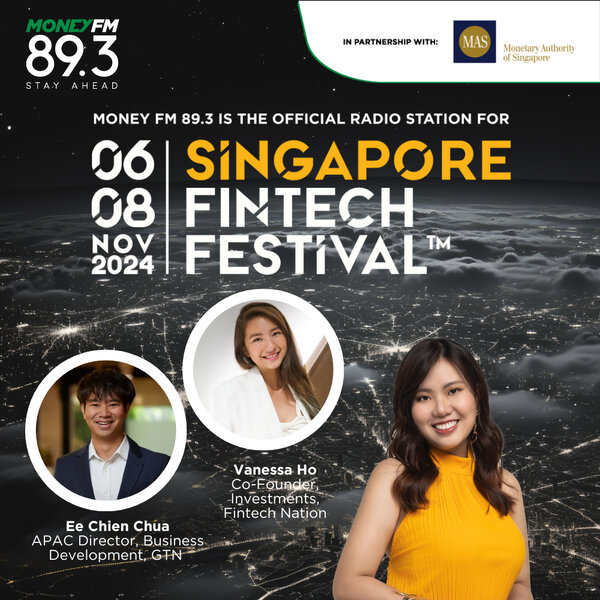
In this segment, we want to talk about the people behind a startup’s first few paychecks.
Business management theory would say that the first people who would give startup money to founders are the friends, family and fools, or people who give what they have in their pockets not because they buy into the founder’s idea, but because they genuinely want to help.
As the company grows over time, startup founders would then seek to raise money from venture capital firms or institutional investors to scale their businesses.
But between getting money from friends, family and fools and getting money from institutional investors lie a very special group of people. They’re angels who would put their capital in early stage startups based on their experience and subject expertise.
But how do angel investors work, and how do they decide on what to invest?
How far do they negotiate for a larger stake in the startups they invest in, how much say do they have in a startup’s direction for the future, and how do they prevent dilution as startups seek further funding from larger investors?
Also – does it make sense for angels to join angel syndicates and which are some of the companies that angels are seeking in the fintech field right now?
As part of MONEY FM’s on the ground coverage of Singapore Fintech Festival 2024, Money Matters’ Finance Presenter Chua Tian Tian posed these questions to Ee Chien Chua, a Fintech Executive & Angel Investor and Vanessa Ho, Co-Founder, Investments, Fintech Nation.
|
|
|
|
|
14:14
|
NOV 14, 2024
14/11/24 - [SFF 2024 Special] Panel on Roadmap for AI and Quantum with DBS and PayPal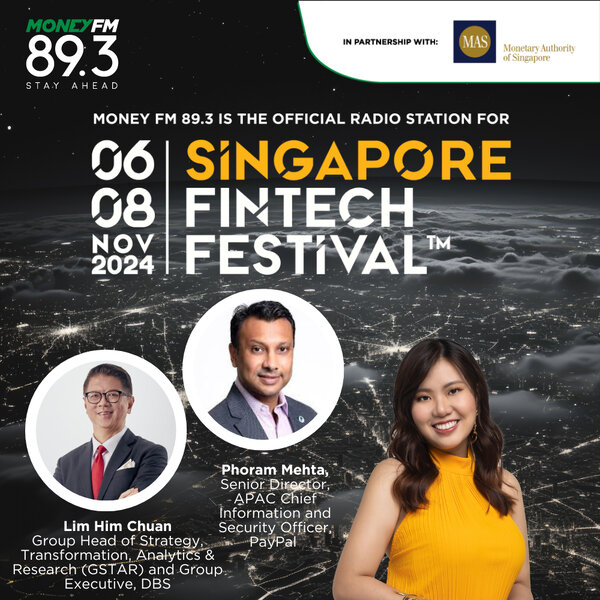
This year’s Singapore Fintech Festival surrounds six major themes that will frame 2025.
At the front and centre of discussions is the Roadmap for AI and Quantum.
Of particular focus this year is the boom in generative AI, which uses algorithms to identify patterns within existing data to come up with new content, ranging from text, images, videos and even codes.
The technology is said to hold the potential to radically change the financial services industry, with an EY analysis suggesting that rethinking the financial institution with Gen AI at its core has the potential to create US$200 billion to US$400 billion by 2023, with productivity gains reaching up to 30 per cent by 2028.
In this panel discussion on the Roadmap for AI and Quantum, we looked at where fintech players are at right now when it comes down to generative AI adoption and what the road to achieving an AI-embedded future looks like for them.
We also dived into emerging risks surrounding AI and challenges surrounding the adoption of quantum computing.
Money Matters’ Finance Presenter Chua Tian Tian spoke with Lim Him Chuan, Group Head of Strategy, Transformation, Analytics & Research (GSTAR) and Group Executive at DBS, as well as Phoram Mehta, Senior Director and Chief Information and Security Officer, International Markets at Paypal for more, as part of MONEY FM’s on the ground coverage of Singapore Fintech Festival 2024.
|
|
|
|
|
33:49
|
NOV 14, 2024
14/11/24 - [SFF 2024 Special] Collaborations in Fintech with Visa and Heymax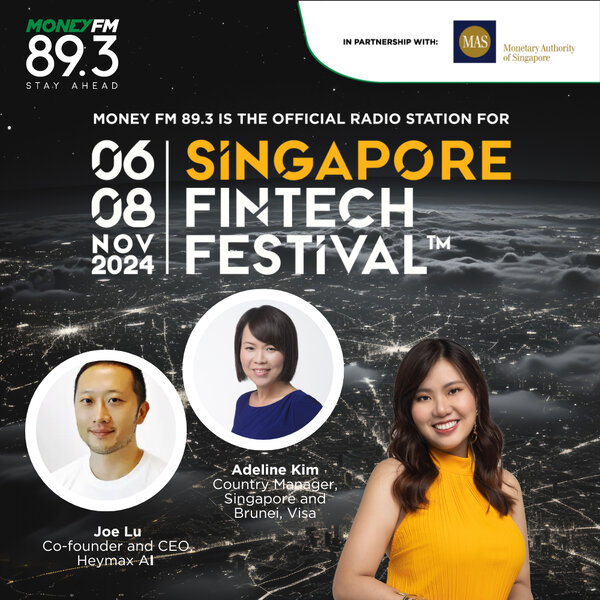
Collaborations in the fintech sector are on the cards today, and with the year end holiday season very much in sight, why not talk about maximising your air miles through credit card spend?
Specifically, we want to talk about how Heymax, a startup aggregating consumers’ fragmented rewards, worked with digital payments leader Visa in rolling out new products and campaigns to customers throughout the course of the year.
In May this year, Heymax announced a new innovation called Card Maximiser, in partnership with Visa. Powered by the Visa Offers Platform, the feature aims to help consumers seamlessly track their spending and optimise credit card rewards.
More recently, Heymax and Visa in September came up with a sustainable travel campaign to double miles earned from MRT or bus rides using Visa-linked cards over the 9.9 period.
But what are the key learnings from such collaborative initiatives? What are the benefits of getting startups and industry leaders to team up and what made them decide to work together again? How far is collaboration the way to go in the fintech space?
As part of MONEY FM’s on the ground coverage of Singapore Fintech Festival 2024, Money Matters’ Finance Presenter Chua Tian Tian posed these questions to Adeline Kim, Country Manager for Singapore & Brunei at Visa, as well as Joe Lu, Co-founder & CEO of Heymax.
|
|
|
|
|
15:41
|
NOV 14, 2024
14/11/24 - [SFF 2024 Special] Top Fintech Trends to Watch with HSBC and Singapore Fintech Association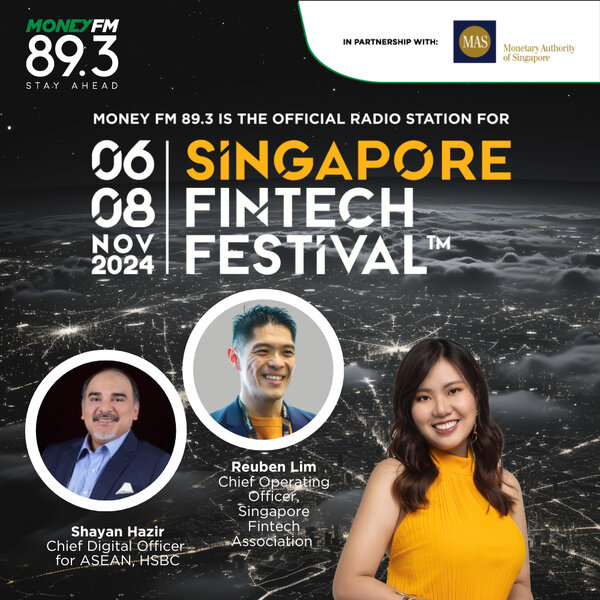
Did you know that despite what appeared to be a tough time for funding and valuations, the global fintech report coauthored by Boston Consulting Group and QED Investors in June this year noted that the global fintech market remained a hotbed for innovation and growth.
The firms expect fintech to reach a market size of US$1.5 trillion in revenue by 2030. That’s about a five times growth from numbers seen at the time the report was written.
However, the report, which was based on interviews with over 60 global fintech CEOs and investors, noted that the rules of the game are changing, with growth at all cost, in their words, “no longer the watchword”.
So what are the major themes shaping the financial technology sector in the longer term? What are the headwinds facing the industry right now and how far are they short-term corrections?
And more importantly, what role will Singapore play in the growing fintech space for startups and industry heavyweights?
As part of MONEY FM’s on the ground coverage of Singapore Fintech Festival 2024, Money Matters’ Finance Presenter Chua Tian Tian posed these questions to Shayan Hazir, Chief Digital Officer of ASEAN at HSBC and Reuben Lim, CEO at the Singapore FinTech Association.
|
|
|
|
|
14:25
|
NOV 4, 2024
04/11/24 - Under the Radar: The many shades of Pantone - its President sheds light on the firm’s business model, collaboration with Nespresso, Porsche, and colour trends
We promise to make this conversation a colourful one as we speak to global colour authority Pantone.
The firm is a provider of professional standards for the design industries, creating a universal language of colour that enables colour critical decisions through every stage of the workflow for brands and the manufacturer.
But did you know that Pantone’s origins could be traced back to a commercial printing company in New York City in the 1950s? The company had systematised and simplified its pigments and coloured inks, and that’s how the Pantone we know came about.
Today, Pantone works with some of the world’s most recognisable consumer, fashion and technology brands, with over 10 million designers and producers relying on its products and services to help define, communicate and control colour from inspiration to realisation.
The firm’s business can be broadly split into four segments: (1) Pantone Standards which feature digital and physical colour specification and workflow tools, the (2) Pantone Colour Institute which provides customised colour standards, brand identity, product colour consulting and trend forecasting, (3) Pantone B2B Licensing and last but not least (4) Pantone Lifestyle that brings colour and design across apparel, home and accessories.
More notably, Pantone is also an operating subsidiary of Veralto, a US$5 billion essential technology solutions leader listed on the New York Stock Exchange. But how does the business work exactly?
Meanwhile, Pantone and luxury car maker Porsche together presented an exclusive colour called Turbonite. That’s a colour with an elegant metallic grey tone customised for the brand and its Turbo derivatives. But what does such collaborations mean for Pantone when it comes down to the P&L?
On Under the Radar, Money Matter's finance presenter Chua Tian Tian posed these questions to Elley Cheng, President, Pantone.
|
|
|
|
|
43:47
|


