

Under The Radar
About
We speak with businesses, industry leaders, venture capitalists and startups on their assessment of the business environment they're in, and what the future holds for them.
JUL 27, 2023
27/07/23 - Under the Radar: Chrono24’s CEO on positioning against Watchfinder, WatchBox, Subdial; Prices of luxury Swiss watches near lowest in almost two years, impact on earnings and operating margins; Longer term outlook; Rolex, AP’s programme to certify pre-owned watches; Investments by Cristiano Ronaldo, family investment vehicle of LVMH’s Bernard Arnault
Did you know that football star Cristiano Ronaldo is somewhat of an investor himself? Today we’re going to talk to a company that he has recently invested in – and that’s online luxury watch resale marketplace Chrono24.
Founded in 2003, Chrono24 prides itself as the number one address for luxury watches for commercial watch dealers and private sellers from around the world.
It currently has over 30,000 professional dealers and private sellers from over 120 countries offer more than 500,000 watches. The company’s website sees over half a million visitors everyday.
In 2020, in particular, it saw watches worth about 2 billion euros transacted through the platform. But what is the demand for luxury watches right now with economies slowing down, interest rates going up, and with cryptocurrencies tumbling?
Also – with prices of Swiss watches near the lowest in almost two years amid falling prices of Rolex, Patek Philippe and Audemars Piguet models, what does this mean for platforms like Chrono24 which charge a fee out of every transaction?
And how far can Rolex and AP’s move to certify pre-owned watches boost the secondary watch market?
On Under the Radar, Drive Time’s finance presenter Chua Tian Tian sat down with Tim Stracke, Co-CEO and Founder, Chrono24 for more.
|


|


|
|
21:12
|


JUL 26, 2023
26/07/23 - Under the Radar: Seoul Robotics on building software systems for self-driving cars; On its ‘Autonomy Through Infrastructure’ approach to building autonomous transportation networks; On partners including Mercedes, BMW, Qualcomm, Nvidia; On its global presence and US office in Peachtree Corner; US$25m Series B funding round led by KB Investment Company; Plans for an IPO by 2025
What happens when you have a group of engineers with backgrounds in 3D data processing in an online class studying computer vision?
Well – they form a company that develops software systems for self-driving cars! And that’s the story behind our guest for today Seoul Robotics.
Founded in 2017, Seoul Robotics develops software systems for self-driving cars to determine traffic conditions.
Its systems rely on data from Light Detection and Ranging or LiDAR sensors rather than a combination of camera sensors, which was unheard of at that point in time.
The firm is also pioneering a new approach to automating vehicles called ‘Autonomy Through Infrastructure’, where autonomous driving systems are placed on infrastructure rather than cars.
This can lower the costs of building autonomous transportation networks, as vehicles do not need to be fitted with cameras and sensors individually. It can also make autonomous transportation safer because autonomous driving systems placed on infrastructure can have a better vantage point and eliminate blind spots.
But how revolutionary is this concept and how much money can this bring to the firm?
Meanwhile, Seoul Robotics is currently working with partners including Qualcomm, and Nvidia, as well as major automakers such as BMW, Mercedes and Volvo. It has also closed a US$25 million Series B funding round led by KB Investment Company back in March. But what value do these strategic partners bring to the table?
On Under the Radar, Drive Time’s finance presenter Chua Tian Tian sat down with HanBin Lee, Captain and CEO, Seoul Robotics for more.
|
|
|
|
|
15:19
|
JUL 25, 2023
25/07/23 - Under the Radar: From an ailing abalone producer to a foodtech company – Oceanus’ CEO Peter Koh on cleaning up the company; Diversification into distribution, services and innovation; When growth will stabilise; Focus in Chinese market, working with state owned China Resources Wufeng Co; Deal in Uzbekistan
From producing abalones to distributing FMCG products and to offering consultation services, our guest for today Oceanus has its wings spread across business pillars such as food production, innovation and distribution.
The aim here is to leverage what it calls cross-pillar synergies for exponential growth to boost financial performance. But having a diversified portfolio of businesses hasn’t always been the case for Oceanus.
It was once an abalone hatchery operator struggling with a lack of internal controls and corporate governance framework.
At one point in 2014, the SGX mainboard-listed company was on the brink of being wound out after losing its entire abalone farm to bad weather, causing it to default on S$94 million in debt.
That was when chief executive Peter Koh was roped in to manage the firm. Changes were made to Oceanus’ business model, and over the years, the firm repaid its dues and restructured its business to include new streams of revenue.
The company also exited the Singapore Exchange watchlist in September 2021 after six years.
But what is Oceanus’ secret sauce to turning the business around? And from inking deals in Uzbekistan and Hainan – what is Oceanus doing to position itself for its next bound of growth?
On Under the Radar, Drive Time’s finance presenter Chua Tian Tian spoke with Peter Koh, Executive Director and Group CEO, Oceanus for more.
|
|
|
|
|
14:50
|
JUL 24, 2023
24/07/23 - Under the Radar: The oldest form of lending – ValueMax’s CMO on demand for pawnbroking services; Record redemptions during the pandemic; its retail, financing and gold trading verticals; Preferred types of pledges; Fed rate hikes and impact on ValueMax’s pawnbroking and gold trading businesses
Today we’re going to look at the oldest form of lending, which dates back to the Ancient Greek and Roman Empires. Make a guess – it was also found in China during the Spring and Autumn Period or between 770 to 476 BCE.
Bingo if you’ve guessed pawn shops! Pawnshops first made their way to modern Singapore back in 1872.There were 25 pawnshops dotted across Singapore from 1920 to 1929, and they generated monthly turnover of over $2 million.
So as you can imagine business was thriving, before the Great Depression in 1929 and World War II dealt a blow to the industry.
90 years after the Great Depression, we’ve got the COVID-19 pandemic and the War in Ukraine. But what do such economic uncertainties mean for pawnbrokers in terms of new loans, redemption and interest income?
Let’s pose the question to our guest for today. Founded in 1988, ValueMax provides pawnbroking and secured money lending services, as well as the retail and trading of jewellery and gold.
The SGX-listed company has 42 pawnbroking and retail outlets across Singapore as well as 21 other outlets in Malaysia operated through its associated company.
On Under the Radar, Drive Time’s finance presenter Chua Tian Tian sat down with Yeah Lee Ching, Chief Marketing Officer and Executive Director, ValueMax for more.
|
|
|
|
|
13:33
|
JUL 20, 2023
20/07/23 - Under the Radar: In conversation with first Singaporean CEO of HSBC Singapore Kee Joo Wong – HSBC Singapore on interest margin with Fed rate hike cycle nearing an end; FDI into ASEAN; A bigger role for Singapore as part of expansion in Asia; Acquisition of Singapore’s AXA Insurance and future deals; HSBC’s acquisition of UK arm of SVB and impact on Singapore; Priorities for HSBC Singapore
Did you know that Singapore has been home to many foreign banks in the 1800s?
In fact our guest for today is one of them. Having opened its first branch in Singapore in 1877, HSBC Singapore is a qualifying full bank serving the international needs of individual, corporate and institutional clients.
It provides retail banking, wealth management, commercial investment, private banking, insurance as well as securities and capital market services.
Fast forward to today, HSBC Singapore has close to 4,000 employees and serves as an international wealth and regional wholesale hub, while being a sandbox for digital innovation experiments for the Group.
The bank is now carving out a bigger role for Singapore as a regional hub as it expands in Asia, with the city receiving funds from a US$6 billion (S$8.1 billion) investment earmarked to drive its Asian growth between 2021 and 2026. But what can we expect on this front?
On Under the Radar, Drive Time’s finance presenter sat down with Kee Joo Wong, CEO, HSBC Singapore for more. He is also the first Singaporean CEO of HSBC Singapore.
|
|
|
|
|
23:11
|
JUL 19, 2023
19/07/23 - Under the Radar: Into the operations of homegrown minerals and resource firm TOP International Holding; On bauxite mining; Diversification to look at trading of iron ore, copper cathode, sand and coal amid shifting global supply chains; Sustaining its 14% yoy growth rate; Future plans
Earlier we told you about the world’s largest mining company BHP. Today we are going to take you closer to home by looking into the operations of a Singapore-grown minerals and resource company.
With a global footprint spanning across countries in Southeast Asia and West Africa, TOP International Holding is an integrated producer of bauxite – or a mineral used to produce aluminium – and offers end-to-end service that includes exploration, mining, marketing, trading logistics and delivery.
The company has grown much since its inception in 2014, with over 250 employees in five countries.
It is also emphasising on diversification, having expanded its trading portfolio to include commodities such as iron ore, copper cathode, sand and coal.
Question is – to what extent has that helped the firm navigate the shifting of global supply chains amid the pandemic? Also – what is TOP International Holding’s growth trajectory like in the near term?
On Under the Radar, Drive Time’s finance presenter Chua Tian Tian posed these questions to Victor Tan, CEO, TOP International Holding.
|
|
|
|
|
20:48
|
JUL 18, 2023
18/07/23 - Under the Radar: Siemens’ ASEAN CEO on Siemens’ 2 billion Euro investment strategy to boost growth, innovation and resilience; S$290m investment into a new factory in Singapore; Demand from Southeast Asia; Metaverse and the rail boom on Siemens ASEAN business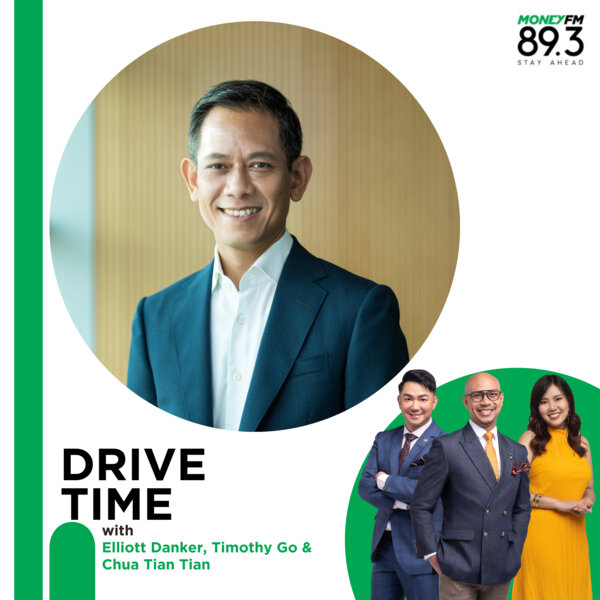
Today we’re going to talk to a German multinational technology conglomerate that set its foot in Singapore 115 years ago.
Bingo if you’ve guessed Siemens. Founded in 1847 as a small workshop in a back courtyard in Berlin, the company’s offerings now span across a wide range of industries such as digital industries, mobility, and smart infrastructure.
The firm first entered in Singapore back in 1908 by establishing a technical bureau in Singapore as a sales office of London-based Siemens Brothers Dynamo Works Limited in search of new opportunities, and has grown with the country since then.
Question is, what is the role of Siemens Singapore in its global portfolio of businesses?
Meanwhile, Siemens is set to build a S$290 million new factory in Singapore for its industrial automation and digitalisation product by 2026.
That’s as part of a 2 billion Euros global strategy to expand the firm’s manufacturing capacity worldwide. But what can we expect on this front?
On Under the Radar, Dr Thai-Lai Pham, CEO, Siemens ASEAN joined Drive Time’s finance presenter Chua Tian Tian in-studio for more.
|
|
|
|
|
14:08
|
JUL 17, 2023
17/07/23 - Under the Radar: VentureBlick’s CEO on its Super Incubator model for medtech startups; Gaps in existing venture support models; Assessment of geographical markets, business verticals; Securing US$2.6m funding for startups; Launch of medical advisory business
You’ve probably heard about incubators and accelerators that help startups scale up before they could stand on their own.
But what about a venture platform dubbed as a super incubator?
That’s what we’re going to talk about today. Founded in 2022, VentureBlick is a Singapore headquartered Super Incubator with a presence in countries such as Australia, China, South Korea, India, Germany and the US.
It matches early-stage startups with medical investors such as clinicians and industry experts who can validate ideas, fund and support the firms without diluting startup control.
The aim is to provide a fully customisable one-stop solution to build, test and market innovations with the ultimate goal of successful exits or commercialisation.
But really how does this proposition differ from the ones provided by other venture platforms?
Meanwhile, VentureBlick recently secured a total of US$2.6 million for two startups amid the current macroeconomic environment. But what is in VentureBlick’s pipeline for the rest of this year?
On Under the Radar, Drive Time’s finance presenter Chua Tian Tian sat down with Chris Lee, Founder and CEO, VentureBlick for more.
|
|
|
|
|
14:19
|
JUL 14, 2023
14/07/23 - Under the Radar: An inside look into the private education business – ESSEC Business School APAC on its industry positioning; Target market; Market for global colleges, universities and professional schools to grow at a CAGR of 5.7% from 2027; New Academy of Luxury in APAC to address talent shortage in booming Asian luxury sector
Today we’re going to bring you an inside look into the private education business.
Founded in 1907, ESSEC Business school is a major French business school with a tightly knit community of some 62,000 graduates.
With the region, ESSEC Business School Asia-Pacific, was established in Singapore in 2005 to offer academic and executive programmes with Asian insights and Western perspectives. It has since welcomed over 5,000 managers and students.
But how does the school differentiate itself from other publicly funded institutions? Who are its target customers and how does it position itself against other players in the education market?
Meanwhile, ESSEC Business School Asia Pacific recently launched its Academy of Luxury to cater to professionals eager to elevate their knowledge and hone skills in luxury management and break into the coveted luxury sector.
The programme was touted as the first of its kind in APAC and seeks to address the ongoing talent shortage in the luxury sector — but to what extent is this shortage driven by a lack in training opportunities?
On Under the Radar, Drive Time’s finance presenter Chua Tian Tian posed these questions to Prof Reetika Gupta, Deputy Dean of ESSEC Business School, Asia-Pacific.
|
|
|
|
|
21:39
|
JUL 13, 2023
13/07/23 - Under the Radar: BHP’s CCO on demand of minerals such as copper, nickel, iron ore, coking coal, potash amid structural trends such as electrification, EV adoption; China’s steelmakers warning of a tough 2H2023 and impact on iron ore prices; Balancing net-zero plans and financial viability
Mining for minerals used in farming, infrastructure and even in electric vehicles. That’s what we’re going to talk about on the segment today, with the world’s largest mining company BHP.
Founded in 1885, BHP is a leading resources company headquartered in Melbourne, with about 80,000 employees and contractors across 90 locations worldwide.
It produces essential commodities through its assets such as open-cut and underground mines, as well as gas production and processing facilities. The minerals include copper for renewable energy, nickel for electric vehicles, iron ore, as well as coal used to make steel.
But how does it operate exactly? What is demand like for the different types of minerals at this point in time?
And with China’s leading steelmakers warning of a challenging second half amid sluggish economic recovery – what will this mean for BHP’s iron and coal mining business?
Meanwhile, BHP earlier announced plans to decarbonise its mining operations to achieve net-zero by 2050, but how does it balance financial viability and environmental goals?
On Under the Radar, Drive Time’s finance presenter Chua Tian Tian sat down with Vandita Pant, Chief Commercial Officer, BHP for more.
|
|
|
|
|
27:28
|


