
Under The Radar
About
We speak with businesses, industry leaders, venture capitalists and startups on their assessment of the business environment they're in, and what the future holds for them.
OCT 6, 2025
06/10/25 - Under the Radar: The ice-cream brand loved by Warren Buffett, Mark Cuban – What should we know about Dairy Queen’s aggressive international expansion plans?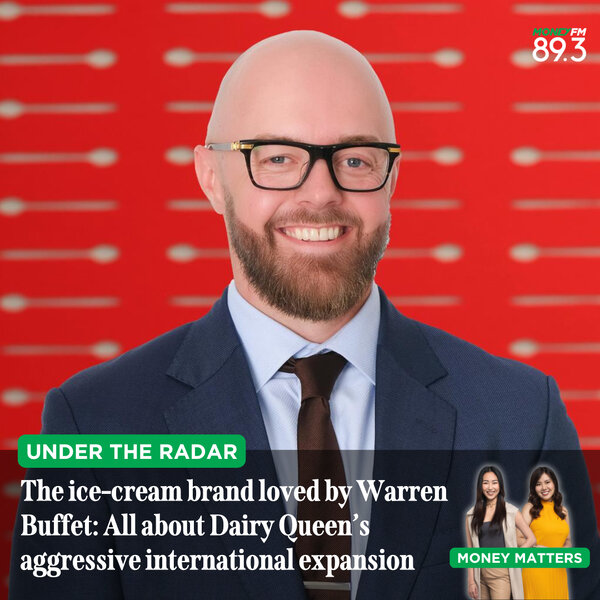
It’s all about ice-cream and fast food today as we turn the spotlight on one of America’s most beloved brands. This brand is also well-loved by billionaires, more notably value investor Warren Buffett and Shark Tank’s Mark Cuban.
You might have by now guessed that I am talking about International Dairy Queen, a company known globally for its soft-serve treats like the Blizzard and the Dilly Bar.
Founded in 1940, International Dairy Queen or the parent company of American Dairy Queen Corporation and Dairy Queen Canada has grown to a global quick service restaurant player.
The firm is also famously known as a wholly-owned subsidiary of Warren Buffett’s Berkshire Hathaway, having been acquired in 1998.
Currently, the firm develops, licenses and services a system of over 7,700 Dairy Queen restaurants over 20 countries. But the firm doesn’t seem to stop there and appears to be on a charm offensive to expand internationally.
For one thing, the firm had in 2022, through American Dairy Queen Corporation and private equity firm FountainVest Partners, unveiled plans to open up 600 Dairy Queen restaurants in China by the end of the decade.
Then came July 2024, when International Dairy Queen teamed up with FountainVest Partner’s franchise ownership company CFB Group to open what’s said then to be the first DQ Blizzard & Burgers restaurant in Shanghai in Asia.
So what was the rationale behind the firm’s aggressive expansion moves? And how far will the company’s international business bolster sales as global trade tensions and tariffs weigh on consumption in the US?
Beyond international expansion, International Dairy Queen is also said to be placing a stronger emphasis on hot food, versus the dessert treats it was once famous for. But why is this the case?
On Under the Radar, Money Matters’ finance presenter Chua Tian Tian posed these questions to Dr. Brandon Guthrie, Director of International Development, Dairy Queen.
|


|


|
|
26:59
|


SEP 25, 2025
25/09/25 - Under the Radar: (SPECIALS) Flying to Shunde, China to uncover what’s Under the Radar about Chow Tai Fook Jewellery’s operations and expansion plans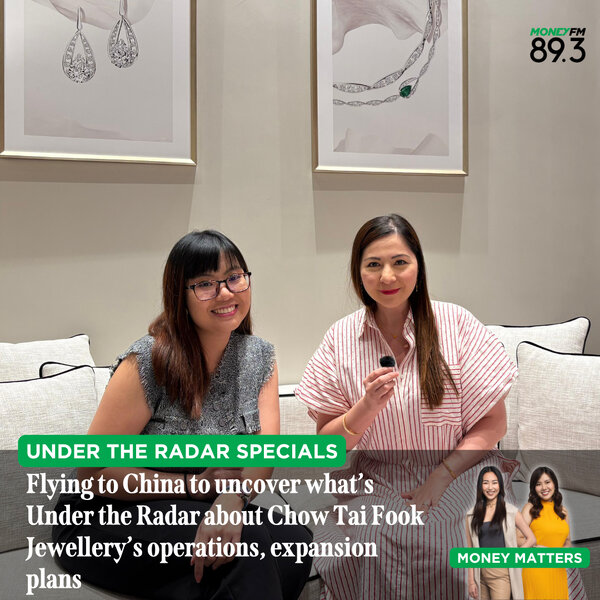
Founded in 1929, Chow Tai Fook Jewellery Group is owned by one of the most influential families in Hong Kong, namely the Cheng family behind the late property tycoon Cheng Yu-tung.
With a deep heritage, the firm’s brand aims to not only honour traditions, but also foster deep, meaningful connections, with a diverse customer base through its jewellery pieces.
The company said its commitment to innovation and craftsmanship has been integral in helping it maintain mindshare among customers over the decades.
In this “On the Go” Special edition of “Under the Radar”, Money Matters’ finance presenter Chua Tian Tian flew down to Guangdong, China on a media tour to see how the company is putting its words into action.
Her journey started at Chow Tai Fook’s Shunde Artisanal Smart Manufacturing Centre, about 1.5 hours drive away from Shenzhen, where she visited the firm’s diamond processing facilities and master studio.
She also visited the firm’s new image store in Shenzhen, where she spoke with Gabriela Ferreira, General Manager, International of Chow Tai Fook Jewellery on the firm’s corporate strategy and expansion plans – including those for Singapore.
|
|
|
|
|
20:05
|
SEP 22, 2025
22/09/25 - Under the Radar: 25 years of StarHub – Its CEO sheds light on acquisition of MyRepublic’s broadband business, changing competitive landscape, and vision for long term growth.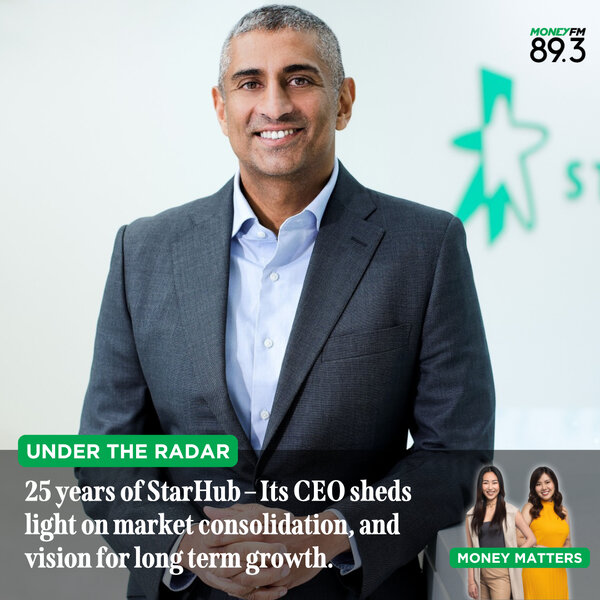
We’re going to revisit an “Under the Radar” guest who first joined us on the show about two years ago.
And this is a leading homegrown Singapore company that delivers what’s said to be world-class communications, entertainment and digital services. And yes – you might be using its 5G network services to tune into this conversation as we speak.
Founded in 2000, telecommunications service provider StarHub seeks to provide people, homes and enterprises mobile and mixed services, a broad suite of premium content, as well as a diverse range of communications solutions through its extensive fibre and wireless infrastructure.
25 years on, the firm also develops and delivers solutions incorporating artificial intelligence, cybersecurity, data analytics, Internet of Things for both corporate and government clients.
And we want to find out what is next for StarHub in a fast evolving market as it celebrates 25 years in the business.
Beyond that, the Singaporean telecommunications industry that StarHub lies in is also an interesting one to look at, as it undergoes a market consolidation.
In August this year, Keppel announced the proposed sale of M1’s telecommunications business to Australian mobile network operator Simba Telecom, for an enterprise value of S$1.43 billion. The move disappointed investors who had hoped for StarHub to buy over M1.
Just a day later though, StarHub announced that it has taken full ownership of MyRepublic’s broadband business. The move was said to strengthen StarHub’s multi-brand and multi-segment strategy in the Singapore broadband market. But what opportunities and synergies is the firm looking to tap exactly?
And how far will a consolidation in the market give telco players like StarHub more flexibility in its pricing to boost its top line numbers?
On Under the Radar, Money Matters’ finance presenter Chua Tian Tian posed these questions to Nikhil Eapen, Chief Executive Officer, StarHub.
|
|
|
|
|
29:44
|
SEP 18, 2025
18/09/25 - Under the Radar: (SPECIALS) Thales Singapore’s CEO sheds light on global aerospace and defence spending momentum, new cortAIx AI centre in Singapore and more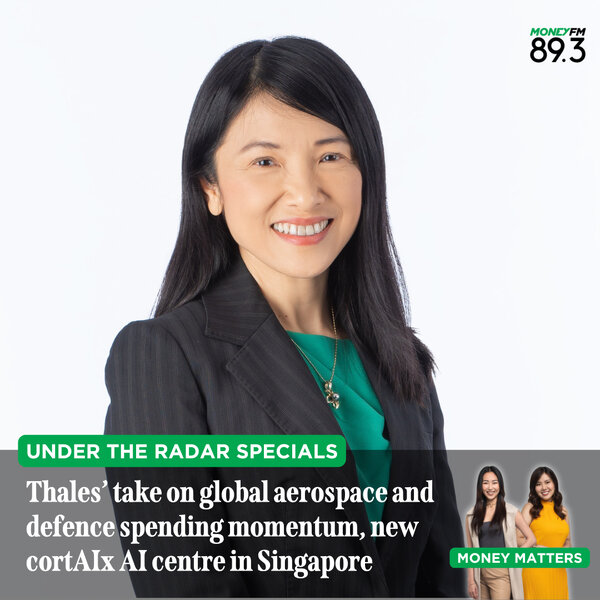
Today we’re going to dive deep into a company which plays an instrumental role in the Defence, Aerospace and Cyber & Digital Sectors.
With over 83,000 employees dotted across five continents, our guest Thales provides solutions, services and products to help companies, organisations and governments carry out their critical missions.
Think about air traffic management, training and simulation to even in-flight entertainment solutions used in the aerospace industry.
Or signals intelligence, electronic warfare and collaborative combat systems for the defence and security industry.
Or even satellite-based systems to help scientists observe our planet and better optimise the use of our solar system’s resources.
Beyond that, the firm is also looking at identity management and data protection technologies that help banks exchange funds, people cross borders and energy become smarter and even more.
Why are we speaking to Thales you might ask? Well, the firm had in July 2025 raised its sales forecast for the year of 2025 while posting better first-half sales and profit.
Thales’ adjusted earnings before interest and taxes, or adjusted EBIT, came in at 1.248 billion euros, up 12.7% on the year on an organic basis. The strong showing was driven by strong sales growth in its aerospace and defence segment, and came on the back of increased military spending in Europe.
But how far can the positive momentum be sustained, and how far will US tariffs throw a spanner in the works? What role will Asia and Singapore play in Thales’ playbook for the future?
Speaking of Singapore, the firm said in May 2025 that it will launch a new artificial intelligence centre, called cortAIx, in the country to develop AI solutions for critical environments.
It also inked an agreement with the Civil Aviation Authority of Singapore to launch an International Avionics Lab in 2026. But what should we know about the moves, and how important are they to longer-term growth for Thales as a whole?
On Under the Radar Specials, Money Matters’ finance presenter Chua Tian Tian posed these questions to Emily Tan, CEO & Country Director, Thales Singapore.
|
|
|
|
|
20:18
|
SEP 11, 2025
11/09/25 - Under the Radar: (SPECIALS) APPEC by S&P Global Commodity Insights – What is the state of the global shipping industry and how are governments balancing the conflicting demands of economic growth versus supply chain resiliency?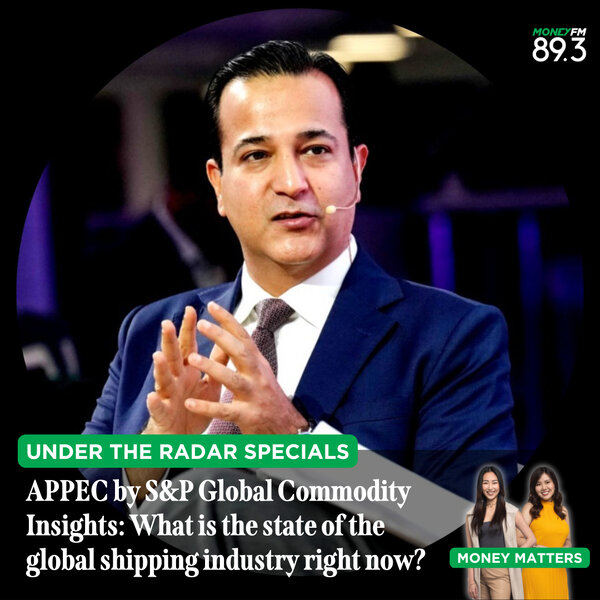
Energy, trade, technology and the green transition – the biggest questions in the oil and gas world converge this week at the 41st annual Asia Pacific Petroleum Conference or APPEC right here in Singapore.
Hosted by S&P Global Commodity Insights, APPEC features over 200 industry leading speakers, and is said to deliver unparalleled insights into the future of the global energy landscape.
MONEY FM is in the thick of it all, as Money Matters’ finance presenter Chua Tian Tian brings you a series of “On the Go” Under the Radar Specials from our on-site booth with key leaders driving conversations ranging from Southeast Asia’s energy transition, to the forces shaping oil prices, global shipping and supply chains.
In the final of three interviews, she spoke with Rahul Kapoor, Global Head of Shipping Analytics & Research of S&P Global Commodity Insights.
The duo dived into the teething issues relating to trade, shipping and the shifting of global supply chains amid ongoing US tariffs and geopolitical uncertainties, and what that means for companies and governments.
|
|
|
|
|
10:39
|
SEP 10, 2025
10/09/25 - Under the Radar: (SPECIALS) APPEC by S&P Global Commodity Insights – Where is the world at in the energy transition journey and how can the global industry and the marketplace support net zero efforts?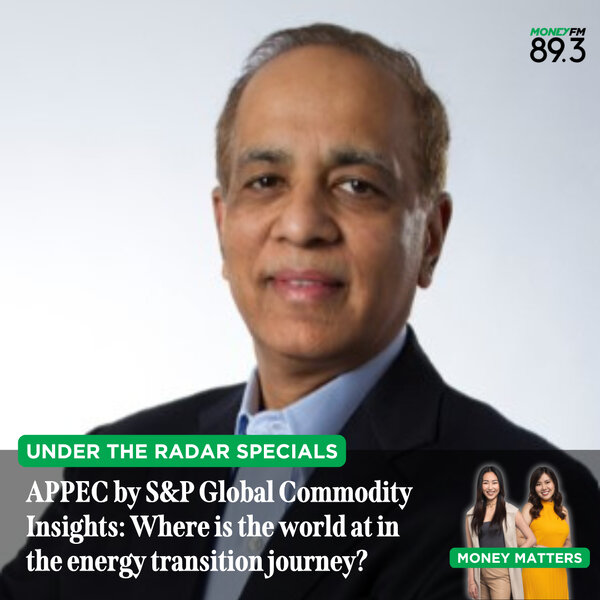
Energy, trade, technology and the green transition – the biggest questions in the oil and gas world converge this week at the 41st annual Asia Pacific Petroleum Conference or APPEC right here in Singapore.
Hosted by S&P Global Commodity Insights, APPEC features over 200 industry leading speakers, and is said to deliver unparalleled insights into the future of the global energy landscape.
MONEY FM is in the thick of it all, as Money Matters’ finance presenter Chua Tian Tian brings you a series of “On the Go” Under the Radar Specials from our on-site booth with key leaders driving conversations ranging from Southeast Asia’s energy transition, to the forces shaping oil prices, global shipping and supply chains.
In the second of three interviews, she spoke with Atul Arya, Chief Energy Strategist of S&P Global Commodity Insights , who gave an overview of the energy transition and net zero efforts in the global industry and the marketplace.
The duo also talked about what the energy mix will look like by the end of the decade, and whether the widespread use of nuclear power for data centres can be a reality.
|
|
|
|
|
08:21
|
SEP 9, 2025
09/09/25 - Under the Radar: (SPECIALS) APPEC by S&P Global Commodity Insights – co-President Dave Ernsberger sheds light on key discussion topics, state of the energy market and the macro outlook ahead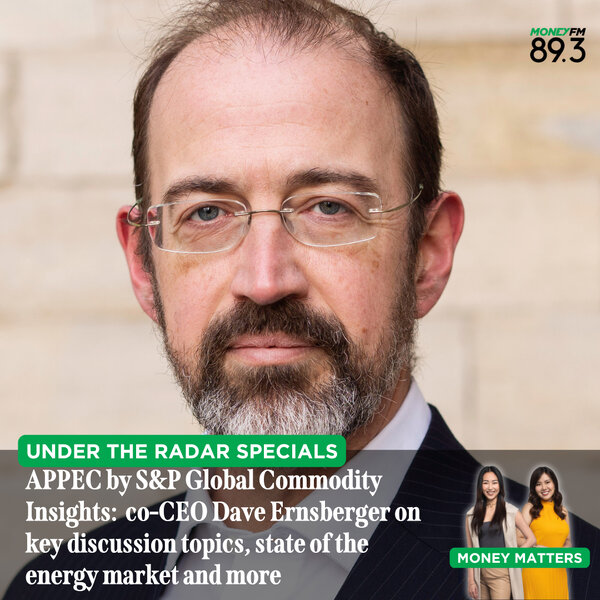
Energy, trade, technology and the green transition – the biggest questions in the oil and gas world converge this week at the 41st annual Asia Pacific Petroleum Conference or APPEC right here in Singapore.
Hosted by S&P Global Commodity Insights, APPEC features over 200 industry leading speakers, and is said to deliver unparalleled insights into the future of the global energy landscape.
MONEY FM is in the thick of it all, as Money Matters’ finance presenter Chua Tian Tian brings you a series of “On the Go” Under the Radar Specials from our on-site booth with key leaders driving conversations ranging from Southeast Asia’s energy transition, to the forces shaping oil prices, global shipping and supply chains.
In the first of three interviews, she spoke with Dave Ernsberger, co-President of S&P Global Commodity Insights, who gave a summary of the key APPEC discussion topics and the overall macro energy outlook amid the current geopolitical backdrop.
|
|
|
|
|
09:07
|
SEP 8, 2025
08/09/25 - Under the Radar: How has Stoneweg Europe Stapled Trust’s strategy evolved through its stapled structure and what is the outlook of the European office and logistics property market? Its CEO tells us more.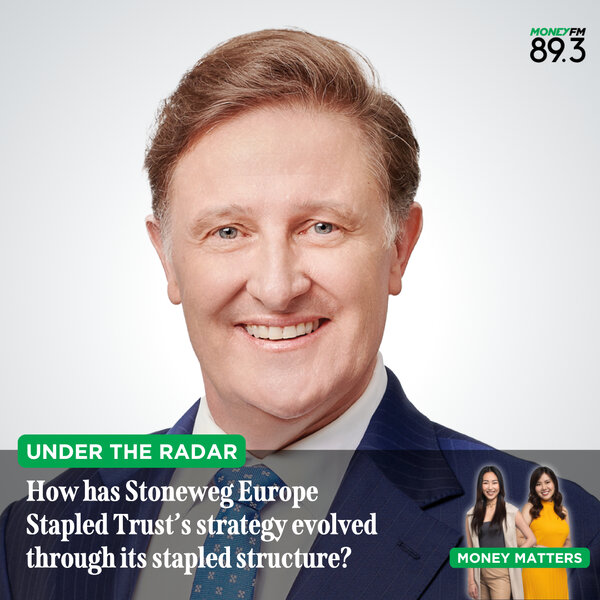
It’s back to the real estate sector today as we speak to an SGX-listed REIT focused on commercial properties in Europe.
Founded in 2017, Stoneweg Europe Stapled Trust is a stapled group that comprises Stoneweg E-REIT and Stoneweg European Business Trust.
You might better know the REIT by its old name Cromwell European REIT before it was bought over by alternative investment group Icona Capital and real estate investment group Stoneweg for 280 million euros or S$395.5 million just a couple of months ago.
Cromwell European REIT was renamed as Stoneweg European Reit at the start of 2025, and later converted into a stapled group in June 2025.
Today, the stapled trust has a principal mandate to invest be it directly or indirectly in income-producing commercial real estate assets across Europe.
In particular, the trust needs to maintain a minimum portfolio weighting of at least 75% to Western Europe and at least 75% to the light industrial or logistics and office sectors.
On top of that, the trust also takes on asset enhancement and redevelopment projects for existing office assets, with a focus on strong ESG credentials in prime and core locations within key European gateway cities.
On the whole, its portfolio value stands at around 2.2 billion euros, with over 100 predominantly freehold properties across major cities in key markets such as The Netherlands, Italy, France, Poland, Germany, Finland, Denmark and the UK.
The total lettable area comes in at around 1.7 million square metres and its client base – over 800 tenant customers.
Now, why are we speaking to Stoneweg Europe Stapled Trust you might ask? Well, we want to find out how the firm assessed its financial performance for the first half of 2025, as well as how its strategy has evolved through its stapled structure.
But on top of that we also wanted to find out more about the outlook of the European office and logistics property market amid macroeconomic headwinds arising from US tariffs.
On Under the Radar, Money Matters’ finance presenter Chua Tian Tian posed these questions to Simon Garing, CEO and Executive Director, Stoneweg Europe Stapled Trust.
|
|
|
|
|
35:02
|
SEP 3, 2025
03/09/25 - Under the Radar: (SPECIALS) On the Go with the “Raging Bull” – Automobili Lamborghini’s Chairman and CEO Stephan Winkelmann on its new Temerario model and how sustainability will turbocharge the firm’s growth.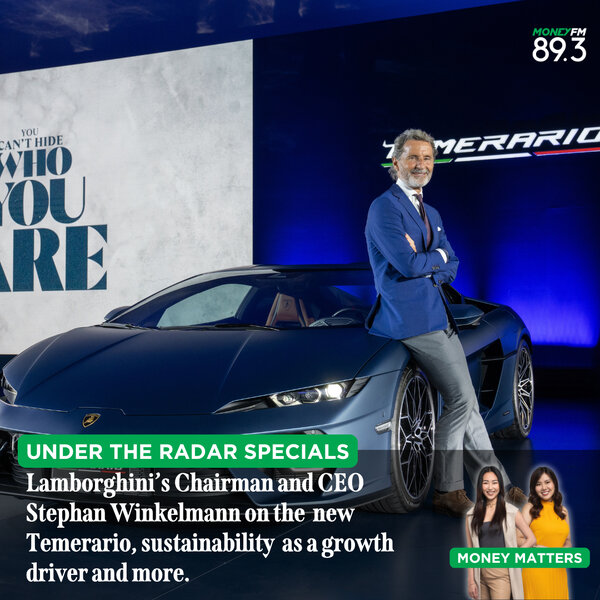
Today we’re going full throttle into the world of performance by speaking to a super car brand known for its “Raging Bull” logo – and that is Automobili Lamborghini.
If you’re a car enthusiast, you might have heard of the origin story of how Automobili Lamborghini was founded in 1963, as a result of an unpleasant exchange between two Italian car enthusiasts.
There are multiple variations of the story going around, but here’s the gist of it all. Well, Lamborghini’s founder, Ferruccio Lamborghini, was a successful tractor manufacturer in the 1960s, and he was supposedly dissatisfied with a clutch problem with his sports car.
Unhappy with the situation, Lamborghini paid a visit to its manufacturer, where his complaints were said to be dismissed with what some reports described as a “stinging” response.
Legend has it that it was exactly this comment from the manufacturer that gave Lamborghini the resolve to build a better sports car. Soon, the Lamborghini 350 GT emerged in 1964, and with it, a “Raging Bull” that aims to trump the “Prancing Horse” (if you get the hint).
That was in the 1960s. Over six decades had passed, and today, Automobili Lamborghini produces some of the most iconic and coveted super sports cars in the world.
In the first half of 2025, the firm delivered 5,681 cars – the highest-ever result for a first half, and a 2 per cent year on year increase from the figure seen in 2024.
But beyond the numbers, it is also an exciting time for Automobili Lamborghini, as the company positions itself for a sustainable future with a fully hybrid fleet.
In fact, the CEO and Chairman of Automobili Lamborghini is right here in Singapore to promote the firm’s new Temerario, its second model in the Lamborghini High Performance Electric Vehicle range.
But what should we know about the new model, and how far is sustainability the key in turbocharging the “Raging Bull”? And what role will Asia and Singapore play in Automobili Lamborghini’s next bound of growth?
On this “On the Go” Special of Under the Radar, Money Matters’ finance presenter Chua Tian Tian sat down with Stephan Winkelmann, CEO and Chairman, Automobili Lamborghini at the launch of Lamborghini’s latest twin turbo V8 high performance electrified vehicle held within Aviation Hub at Seletar Aerospace View in Singapore.
|
|
|
|
|
19:15
|
AUG 25, 2025
25/08/25 - Under the Radar: What should we know about Red Hat and its partnerships with AMD and Nvidia in the age of generative AI?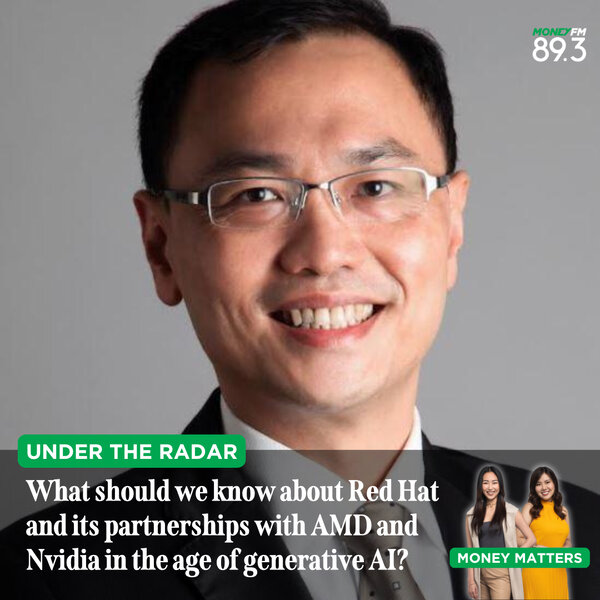
It is all about software companies today, and this time, we’re going to talk about a company that builds and improves on the open-source Linux operating system – Red Hat.
The history of Red Hat takes us all the way back to 1993, when software was distributed through physical CDs in retail stores. That was when a small businessman named Bob Young, met tech geek Marc Ewing at a tech conference.
Young had been running a computer supply catalogue business out of his home at that point, and Ewing had been geek-hacking and spinning his own distribution (or his own improved rendition) of Linux operating systems on CDs from his home.
Young decided to buy Ewing’s CDs to tap a growing interest in the Linux operating system, and he sold out of them so many times that the duo teamed up to found Red Hat Software in 1995.
At Red Hat, the firm pursued a stable and accessible distribution of a constantly evolving, community-developed Linux operating system, instead of protecting trade secrets and filing patents for expensive proprietary products taken by most industry players.
The firm reached multiple milestones through the years, going public with a record setting IPO in 1999. It also became the first open source technology company to exceed US$1 billion in revenue in 2012.
Then came 2019, when IBM acquired Red Hat for US$34 billion in one of the largest software acquisitions in history.
Today, RedHat is the world’s leading provider of enterprise open source software solutions, using a community approach to deliver what’s said to be reliable and high performance Linux, hybrid cloud, container and Kubernetes technologies.
But how is Red Hat faring at this moment in time? Also – how is it evolving in the age of generative AI? How far are partnerships with chip titans AMD and Nvidia key to future success?
On Under the Radar, Money Matters’ finance presenter Chua Tian Tian posed these questions to Daniel Aw, Vice President of Enterprise Sales, Asia Pacific at Red Hat.
|
|
|
|
|
29:15
|


