

Under The Radar
About
We speak with businesses, industry leaders, venture capitalists and startups on their assessment of the business environment they're in, and what the future holds for them.
AUG 2, 2024
02/08/24 - Under the Radar: Overcoming language barriers with AI - German translation startup DeepL on future growth, backing by Mark Zuckerberg’s Family Office fund and expansion in Asia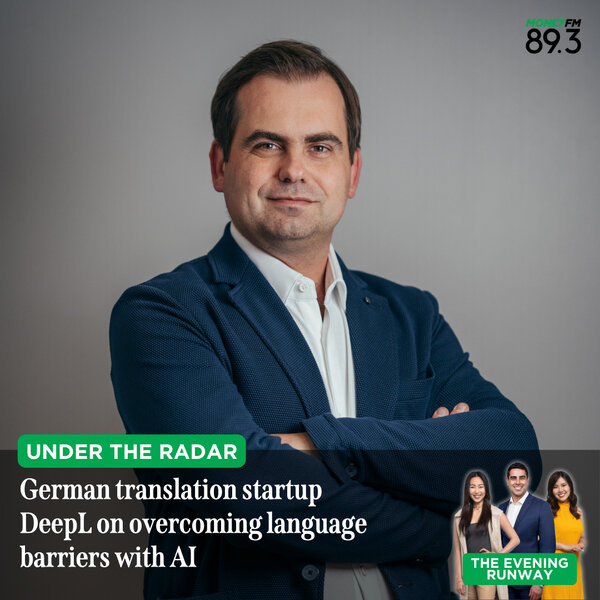
Using artificial intelligence to overcome language barriers through human-like machine translation. That is what we are going to talk about today.
Founded in 2017, our guest DeepL is a global communications startup powered by Language AI. Language AI, for context, is a field of artificial intelligence that looks at getting computers to understand and communicate in the human language.
Now, back to DeepL, the German company works on human sounding translations and intelligent writing suggestions for enterprises across 32 global languages, and is said to be able to translate with pinpoint accuracy, accounting for industry-specific terminology and situational context.
Since its founding, DeepL has enabled over 100,000 businesses to transform communications, reach new markets and improve productivity.
The company is seen as a competitor to Alphabet’s Google Translate. It is also backed by a number of notable names including a fund from Mark Zuckerberg’s family office and Index Ventures.
Its valuation? A whopping US$2 billion as of May this year.
Aside from the big numbers, DeepL is also seeing a number of exciting developments of late. The company had in late July launched traditional Chinese as a language option as it looks to double down on its presence in Asia.
But why did DeepL choose to offer this rather niche language used mostly in Hong Kong and Taiwan, and how far will this help it compete against major Chinese technology giants such as Baidu and Tencent which provide translation tools in simplified Chinese?
Meanwhile, the firm had also in the same month launched a language model that is said to outperform GPT-4, Google and Microsoft for translation quality. But how will this set the stage for DeepL as it pursues future growth?
On Under the Radar, The Evening Runway’s finance presenter Chua Tian Tian posed these questions to Jarek Kutylowski, CEO and Founder, DeepL.
|


|


|
|
23:39
|


JUL 31, 2024
31/07/24 - Under the Radar: Beyond the Banyan – Banyan Group’s founder Ho Kwon Ping on shoring up share prices, brand positioning, further expansion and family business succession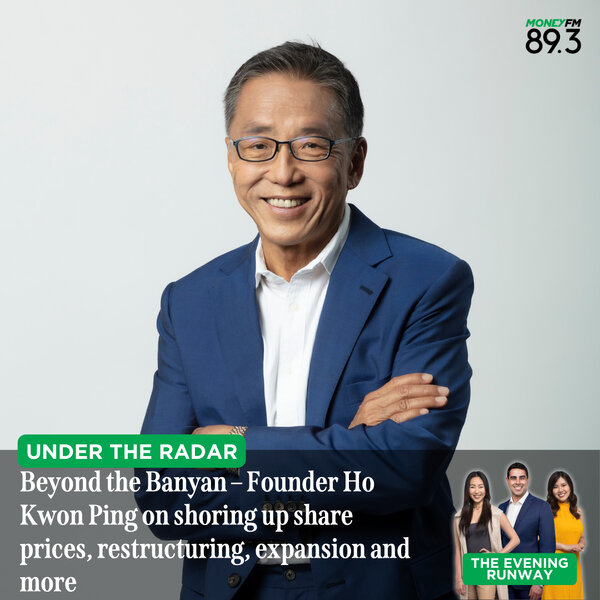
From a single resort in Phuket to becoming one of the world’s leading independent, multi-branded hospitality groups – today we’re going to bring you an inside look into the growth story of Banyan Group.
With its beginnings dated about 30 years back to 1994, Banyan Group was founded as a sanctuary for the senses and now boasts a diversified portfolio of hotels, resorts, spas, galleries, golf and residences centred around 12 major brands, including: Banyan Tree, Angsana, Cassia, Dhawa and Laguana.
The business was built around the core-concept of sustainability, and adopts what it calls an “asset-right” model to maximise value for its stakeholders through a three-pronged approach.
That includes rebalancing asset ownership to focus on key competencies, unlocking land banks to realise development value and growing fee-based segment through strategic industry partnerships.
Why are we talking to Banyan Group you might ask? Well, the firm had in January this year shifted its corporate umbrella brand from “Banyan Tree Group” to Banyan Group to reflect its portfolio transformation from a single luxury brand to a multi-brand player.
That’s as the firm seeks further expansion with 19 new properties and residences in Cambodia, China, Japan, South Korea, Vietnam and Mexico in the pipeline for this year. So what can we expect on this front, and how far will a new umbrella brand help individual brands under the Group better position for the future?
Meanwhile, the firm’s founder Ho Kwon Ping also told Nikkei Asia in February that the firm plans to split its hotel and property development units to unlock value for the Group. But how effective will this be in shoring up the share prices of the firm?
On Under the Radar, The Evening Runway’s finance presenter Chua Tian Tian posed these questions to Ho Kwon Ping, Executive Chairman and Founder, Banyan Group.
|
|
|
|
|
40:09
|
JUL 29, 2024
29/07/24 - Under the Radar: What is Emirates SkyCargo’s assessment of global and Singapore air freight demand amid port congestions?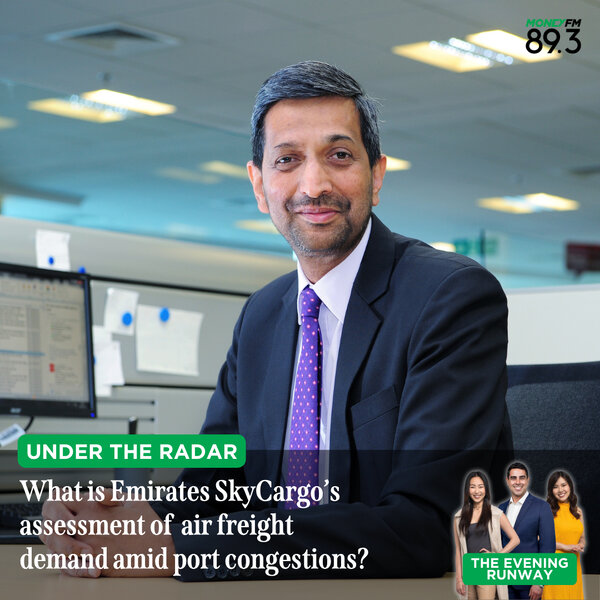
We’re going to bring you an inside look into the air cargo industry today as we speak to the cargo arm of the world’s largest international airline.
Incepted in 1985, our guest Emirates SkyCargo prides itself as a facilitator of global trade, tapping Emirates’ global network of over 140 destinations across 6 continents to transport goods to all corners of the world.
The cargo arm prides itself as having an extensive cool chain capacity, including the world’s largest, EU GDP-certified pharmaceutical hub to transport sensitive cargo quickly, efficiently and reliably.
It operates two world-class cargo terminals at its dual-airport hub in Dubai, with a capacity of over 2.3 million tonnes per annum.
In Singapore, operations began in 1990 with direct flights from Dubai to Singapore and Manila. Since then, the airline has increased capacity to 3 freighter flights per week to strengthen trade links between the East and West.
More notably, Emirate SkyCargo transported over 18,600 tonnes of cargo in and out of Singapore in FY 23-24, with key exports from Singapore being ship and aircraft parts, pharmaceuticals, mobile phones and more, and key imports being fresh fruits and foodstuffs. But how important is Singapore’s air hub to Emirates SkyCargo?
Meanwhile, data from the International Air Transport Association or IATA released in July showed strong annual growth in demand in global air cargo markets in May.
With port congestion remaining an issue for the industry, what will this mean for Emirates SkyCargo in terms of prices and demand for air freight? Is the situation more or less pronounced in Singapore than around the world?
On Under the Radar, The Evening Runway’s finance presenter Chua Tian Tian posed these questions to Ravishankar Mirle, Vice President of Cargo Commercial, Far East & Australasia, Emirates SkyCargo.
|
|
|
|
|
37:24
|
JUL 25, 2024
25/07/24 - Under the Radar: L’Oreal Singapore on being at the intersection of beauty and technology and its move to tap the luxury segment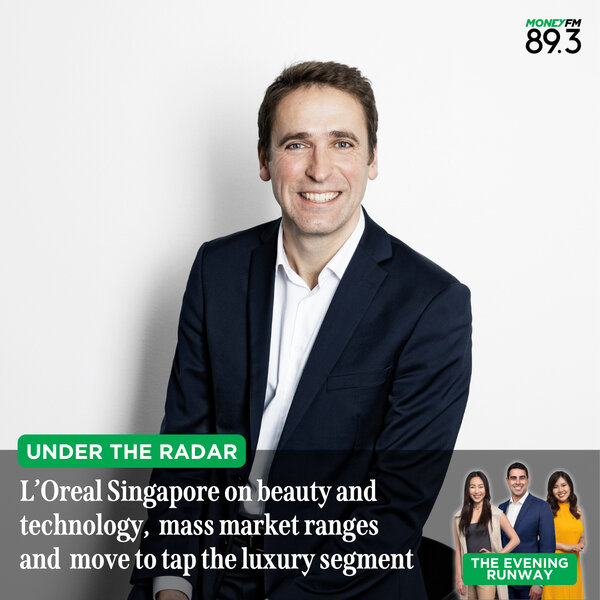
It’s all about taking your beauty into your hands “because you’re worth it”.
Sounds familiar? You might have by now guessed who we’re speaking to for today’s discussion – yes, it is indeed personal care and cosmetics giant L’Oreal.
On that note – did you know that the tagline was coined in 1971 by a 23-year-old female copywriter at a Manhattan ad agency McCann.
But taglines and branding aside, L’Oreal positions itself as a leader of the beauty tech world, with the century-old firm boasting a workforce of 86,000 employees across 150 countries,
The company has a portfolio of 36 international brands split into four divisions, namely (1) Luxe, (2) Consumer Products, (3) Dermatological Beauty and (4) Professional Products.
Some of the brands include Kiehl’s Lancome, Ralph Lauren, Biotherm, Shu Uemura, Urban Decay, L’Oreal Paris, Prada Beauty, Garnier and Maybelline New York.
At a global level, L’Oreal had in April this year reported a 9.4 per cent increase in Q1 sales on a like-for-like basis, exceeding analysts’ expectations.
Sales for the quarter came in at 11.24 billion euros or US$11.98 billion for the three months to March, easing concerns over an economic slowdown in the world's two largest economies of the US and China. But how far did Singapore contribute to the numbers?
The latest showing also comes as the firm’s mass market range and dermatological products compensated for weakness in the luxury segment. But how far is this the case in Singapore, and what does the current economic uncertainty mean for the firm’s push into the luxury sector?
Meanwhile, L’Oreal had announced a number of agreements with institutions in Singapore to develop youth-led innovation. But what can we expect on this front?
On Under the Radar, The Evening Runway’s finance presenter Chua Tian Tian posed these questions to Tomas Hruska, Managing Director of L’Oréal Singapore and Malaysia.
|
|
|
|
|
29:41
|
JUL 23, 2024
23/07/24 - Under the Radar: Supernal on agreements with EDB, CAAS and the role of Singapore in building an ecosystem of support infrastructure, creating regulatory frameworks for urban air mobility networks
We’re going to take you to the skies today, not by using a plane but by getting you to hop on a flying car instead!
Announced in 2021 as an evolution of Hyundai Motor Group’s urban air mobility business, our guest Supernal is on the quest to develop an electric vertical take-off and landing (or eVTOL) vehicle, as well as the accompanying ground-to-air ecosystem to support the emerging industry.
The company prides itself as harnessing world class manufacturing, automation, supply chain and R&D expertise to make what it calls the new and efficient transportation option widely accessible in the coming decades.
What that means to the firm, is that it is focused on building the right product and market fit, more so than rushing to be the first to market.
To this end, the company had in January unveiled its electric vertical take-off and landing vehicle concept at one of the largest technology events globally, the 2024 Consumer Electronics show.
It was also at the sidelines of this event that the company said it would commercialise the S-A2 aircraft by 2028 in South Korea and the US. So when will the vehicles be commercially available in Sunny Singapore?
Speaking of Singapore, Supernal had in February this year inked agreements with the Singapore Economic Development Board and the Civil Aviation Authority of Singapore to further develop advanced air mobility capabilities and expertise in both Singapore and Asia Pacific.
But what can we expect from both sides when it comes to creating regulatory frameworks in the nascent industry and building an ecosystem of support infrastructure for urban air mobility networks?
And how important is Singapore as both a demand market and a testbed for Supernal given its population density?
On Under the Radar, The Evening Runway’s finance presenter Chua Tian Tian posed these questions to Diana Cooper, Chief Partnerships and Policy Officer, Supernal.
|
|
|
|
|
19:15
|
JUL 15, 2024
15/07/24 - Under the Radar: Making OrangeTee more productive to capture younger homebuyers - its CEO on how the agent-centric business is revamping internally to pursue future growth
Transforming the real estate agency business to better relate to customers and tap demand from younger homebuyers. That’s what we’re going to talk about today.
Launched in February 2000, our guest OrangeTee aspires to be a reputable, dynamic and fast growing real estate enterprise in Singapore.
The firm prides itself on building trust and long-term relationships and its ability to embrace the old and new to thrive in the realty space.
More notably, the associate agencies of OrangeTee and Edmund Tie & Company had in 2017 merged to form OrangeTee and Tie, a move that puts the workforce of the combined entity of over 4,050 property agents.
Now, OrangeTee is an interesting company to look at because of a number of things. First of all, the company had a leadership reshuffle at the start of this year, where it appointed a new CEO, Justin Quek, who thereafter headed a brand refresh at the company in a bid to underline the firm’s commitment to simplify the real estate experience.
More importantly, the firm also appears to be on the charm offensive to tap a growing group of younger homebuyers and increase productivity.
One way it is doing so, is by engaging younger property agents and enabling agents to increase the transaction size of their deals. It is also in the midst of an internal revamp to make the once “agent-centric” business a more “consumer-centric” one, with a consumer-focused “Property Festival” in store for Q3.
But how much money can the firm unlock by tapping the younger demographic and what challenges does the company face given the amount of cooperation needed from its thousands of agents to transform the way the firm sells houses?
On Under the Radar, The Evening Runway’s finance presenter Chua Tian Tian posed these questions to Justin Quek, Chief Executive Officer, OrangeTee.
|
|
|
|
|
43:26
|
JUL 11, 2024
11/07/24 - Under the Radar: How are legacy firms in the maritime industry tapping the startup ecosystem for future growth – Wilhelmsen sheds light on the matter.
Tapping emerging opportunities in the maritime industry – that is what we’re going to talk about today.
Founded in Norway in 1861, our guest is the corporate investment arm of Wilhelmsen. Wilhelmsen, for context, has one of the world’s largest maritime networks on call 24/7 to provide essential products and services to the merchant fleet.
With thousands of employees spread across close to 60 countries, the company is said to supply crew and technical management to the largest and most complex vessels ever to sail.
But perhaps what is more exciting about this century old global maritime industry group is how it is leveraging the startup ecosystem to sieve out new opportunities and pockets of growth.
For one thing, Wilhelmsen came up with a joint venture with German engineering firm thyssenkrupp called Pelagus 3D to use 3D printing technologies to make custom, standard and obsolete spare parts on-demand.
The question is – how far will corporate venture initiatives help position the firm for future, and ride the wave of the transforming maritime industry?
Meanwhile, Singapore had in 2021 set out its ambitions to make the country the Silicon Valley of maritime technology, raising its 2025 target for the number of maritime startups up from 100 to 150.
So what opportunities does the geographical market present for old-timers and legacy firms like Wilhelmsen?
On Under the Radar, The Evening Runway’s finance presenter Chua Tian Tian posed these questions to Nakul Malhotra, Vice President, Emerging Opportunities Portfolio, Maritime Services, Wilhelmsen.
|
|
|
|
|
27:21
|
JUL 9, 2024
09/07/24 - Under the Radar: Behind American Standard, Grohe - LIXIL on growth opportunities in the plumbing fixtures industry, role of Singapore market amid lower global home sales and property slump in China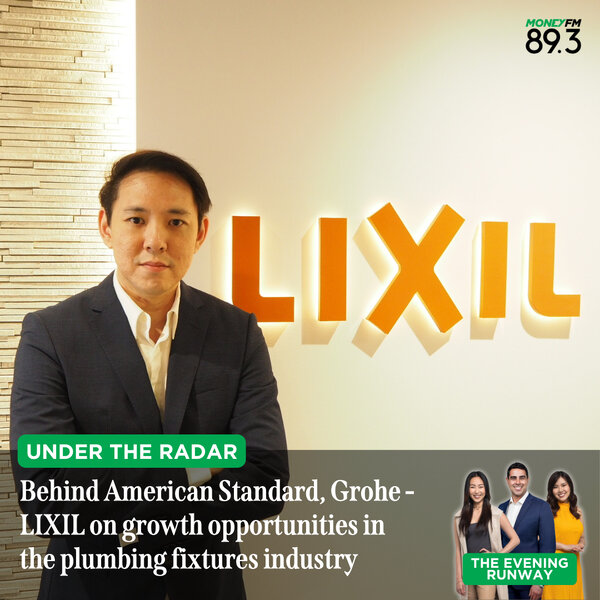
We’re going to talk all about bathroom and kitchen fixtures today. Now, the next time you visit the bathroom, take a look at the brand of the sinks and toilets.
Chances are – they’re of the American Standard and Grohe brands. But did you know that they are all part of a leading Japanese home and water products giant called LIXIL?
Born in 2011 through a merger of five of Japan’s most successful building materials and housing companies, LIXIL makes pioneering water and housing products with the aim of making better homes a reality for everyone everywhere.
Just to give you a sense of the company’s scale, LIXIL has approximately 60,000 employees in over 150 countries around the globe, having expanded to international markets through the acquisition of North American plumbing fixtures maker American Standard and German manufacturer Grohe.
Its reach – a whopping one billion people each day through its portfolio of 15 product brands.
This is no surprise given the size of the global plumbing fixtures market, with Precedence Research valuing it at US$90.11 billion in 2023. That figure is expected to reach US$140.21 billion by 2033, translating into a CAGR of 4.52% from 2024 to 2033. But what is LIXIL’s assessment of the market and what will be the key drivers of growth?
Meanwhile, makers of building fixtures appear to be weighed down by lower home sales amid elevated global interest rates, as well as a property slump in markets such as China in the near term.
But how does LIXIL intend to navigate this, and how far will Singapore act as a buffer against short-term volatilities for LIXIL?
On Under the Radar, The Evening Runway’s finance presenter Chua Tian Tian posed these questions to Koh FuSheng, Leader, Singapore, LIXIL Water Technology APAC.
|
|
|
|
|
35:48
|
JUL 5, 2024
05/07/24 - Under the Radar: How far is precision manufacturer Fu Yu Corporation seeing the green shoots of growth post-strategic review?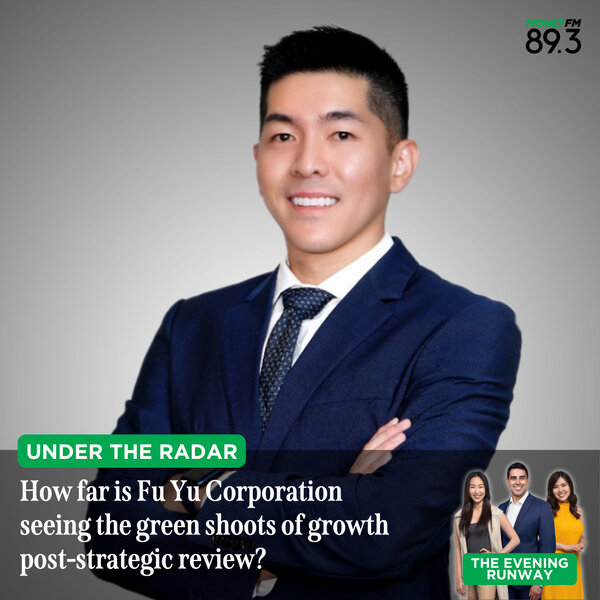
Today we’re going to talk to a Singapore listed company that is said to be the country’s oldest and one of Asia’s largest manufacturers of high-end precision plastic and metal components and products.
With over 45 years of manufacturing experience, our guest Fu Yu Corporation operates six manufacturing sites across Singapore, Malaysia and China.
The firm serves a wide range of sectors including automotive, biomedical and consumer products, making products such as water filters, medical endoscopes and more. More notably, the company also expanded its offering to provide supply chain solutions at the height of the pandemic in 2021.
But why are we talking about Fu Yu Corporation you might ask? Well, the firm had in November last year completed a strategic review where it outlined new transformation strategies to build a stronger business foundation, open up new business opportunities and enhance shareholder value.
That’s amid an economic slowdown in China, rising interest rates globally and customers holding large stockpiles of inventory post-pandemic.
To this end, the firm said then that it has doubled down on investments on machinery and manpower to manufacture higher precision products such as plastic lenses for electric cars and other biomedical products – but why is it moving up the value chain – and how far have the investments reaped rewards now that we are in 2024?
Meanwhile, Fu Yu Corporation posted a net profit of S$5,200 for the first quarter of its 2024 fiscal year ended March, marking a reversal from a net loss of S$2.4 million seen in the same period last year.
The showing comes as revenue in the quarter more than doubled on the year to nearly S$79 (S$78.9 million), driven by higher contributions from the company’s supply chain services management arm.
Question is – what are the trends bolstering demand for the firm’s supply chain management services? Also – where would Fu Yu Corporation then put its resources into to tap future growth in future?
On Under the Radar, The Evening Runway’s finance presenter Chua Tian Tian posed these questions to David Seow, Group CEO of Fu Yu Corporation Limited.
|
|
|
|
|
27:30
|
JUL 3, 2024
03/07/24 - Under the Radar: Sony Music Entertainment on ASEAN pop culture, Singapore as a live music hub, relationship between record labels and streaming, social media platforms, stance on AI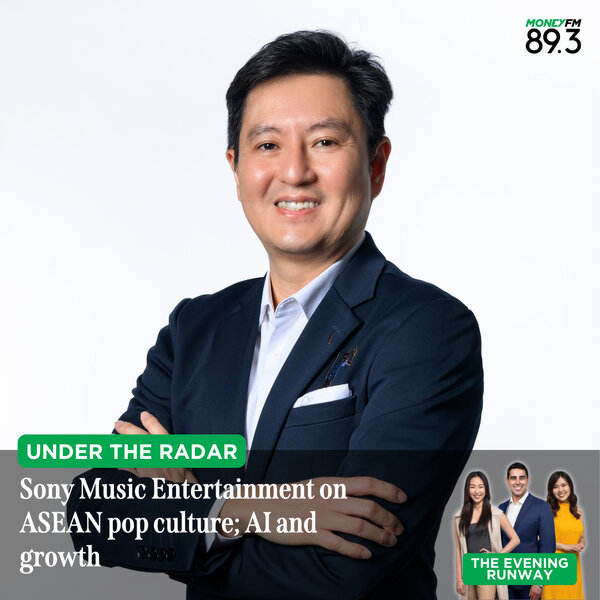
Pop diva Celine Dion, American country music singer Nate Smith, and Korean girl group Blackpink’s Lisa. They have all worked with the company we’re going to talk to for today, in one capacity or another.
With a footprint spanning across 100 countries, our guest Sony Music Entertainment, an American music recording company owned by the Sony Music Group.
The company prides itself as sitting at the intersection of music, entertainment and technology, bringing imagination and expertise to the newest products, platforms, embracing new business models and breakthrough tools as it helps artists push through creative boundaries and reach new audiences.
It supports a diverse roster of international superstars, developing and independent artists and visionary creators, and is said to be one of the big three recording labels in the world as of last year.
According to data from Statista, Sony Corporation's music segment revenue for 2023 stood at a whopping US$10.35 billion, up from the US$9.15 billion seen in FY2022.
But to what extent is this driven by Sony Music Entertainment, and how far have markets in Southeast Asia, and in particular Singapore, Malaysia and Vietnam contributed to the numbers?
Which are the key trends to watch in the music industry and which will be the key markets that will lead the pop culture in ASEAN? How will changing patterns in music consumption augment the power dynamics between record companies and streaming players, and increasingly, social media platforms?
And what value does Singapore bring to record labels with the country being the hotspot for live music events with global acts by international names such as Tate Mcrae and Laufey?
Plus – what is Sony Music Entertainment's stance towards the use of artificial intelligence in music creation?
On Under the Radar, The Evening Runway’s finance presenter Chua Tian Tian posed these questions to Kenny Ong, Managing Director for Malaysia, Vietnam and Singapore and Special Projects Southeast Asia, Sony Music Entertainment.
|
|
|
|
|
41:48
|


