

Under The Radar
About
We speak with businesses, industry leaders, venture capitalists and startups on their assessment of the business environment they're in, and what the future holds for them.
SEP 12, 2024
12/09/24 - Under the Radar: How does Mondelez assess the success of the business after being spun off from Kraft Foods? What are some future growth drivers?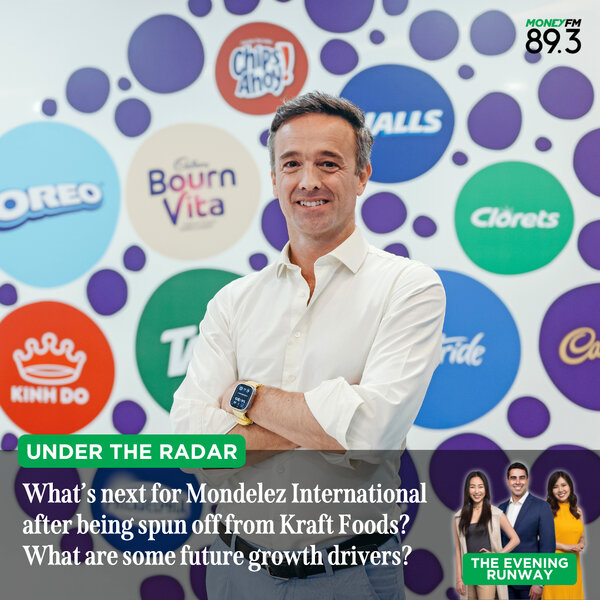
It’s almost time for dinner, but today’s conversation might just get you reaching out for that bag of chocolates or snacks right before meal time.
That’s because we’re speaking to one of the largest players in the global snacking industry today – Mondelez International.
Mondelez International is a relatively young company founded in 2012, but its history goes way back. The company emerged when the then-Kraft Foods was split into two companies to separate its North American grocery business with the remaining of the company.
The North American grocery was called Kraft Foods Group, while the remainder of Kraft Foods was renamed into Mondelez International in October 2012, with a focus on snacks and confectionery.
Mondelez International holds some of the most iconic snack brands that we know today, including iconic US$1 billion dollar global brands such as Oreo, Toblerone and Cadbury, as well as other well-known local jewels such as 7Days and Alpen Gold.
As for the money – its 2023 net revenues came in at approximately US$36 billion.
But what was the rationale behind the spinoff? How would the firm assess the success of the spinoff of Kraft Foods Group and the rebranding into Mondelez international thus far?
Meanwhile, Mondelez International had in July this year missed expectations for second quarter revenue as consumers tighten their purse strings amid high inflation. But how would the firm assess its most recent performance? Which are the key markets and categories driving growth and what are the opportunities ahead?
Speaking of markets, Mondelez International is reportedly said to expand its presence in China by introducing a wider range of cake-related products. It also said in May 2024 that it will invest over US$5 million in a Regional Biscuit and Baked Snacks Lab and Innovation Kitchen in Singapore. But what can we expect on both fronts?
On Under the Radar, The Evening Runway’s finance presenter Chua Tian Tian posed these questions to Tomás Centeno, Vice President of Strategy and Commercial Excellence, Asia Pacific, Middle East & Africa (AMEA), Mondelēz International.
|


|


|
|
26:25
|


SEP 10, 2024
10/09/24 - Under the Radar: What does CapitaLand Investment’s Southeast Asia business entail? SEA Investment CEO Patricia Goh spills the beans.
Today we’re going to talk about a blue chip company listed on the SGX that will definitely ring a bell with our audience, especially those tracking the Straits Times Index.
Headquartered in Singapore, our guest CapitaLand Investment is a global real asset manager with a strong Asia foothold.
If you recall, the company successfully de-merged from the development business of CapitaLand Limited some time back. It then listed on the SGX-Securities Trading Limited on 20 September 2021, creating one of Asia’s leading listed global real asset managers.
The firm looks at a diversified range of real estate asset classes including retail, office, lodging, industrial, logistics, business parks, wellness, self-storage and even data centres. That’s across core markets within Southeast Asia as well as in China and India.
As of the end of June 2024, the firm had S$134 billion worth of assets under management, as well as S$100 billion of funds under management held via six listed real estate investment trusts and business trusts, as well as a suite of private real asset vehicles that invest in thematic and tactical strategies.
In Southeast Asia, CapitaLand Invest manages three funds including the S$1 billion CapitaLand SEA Logistics Fund as well as the firm’s inaugural wellness and healthcare-related real estate fund called the CapitaLand Wellness Fund. But what will the firm’s focus areas within the region be going forward?
On Under the Radar, The Evening Runway’s finance presenter Chua Tian Tian posed these questions to Patricia Goh, Chief Executive Officer, Southeast Asia Investment, CapitaLand Investment.
|
|
|
|
|
23:05
|
SEP 4, 2024
04/09/24 - Under the Radar: What are the key drivers of growth for ByteDance’s super app for enterprises Lark?
Imagine a productivity super app for businesses to digitalise operations from HQ to storefront, streamline communications, and achieve operational efficiency – all in one place. That’s Lark for you.
Initially developed by Chinese social media giant ByteDance in 2016 for internal use, Lark started as a platform that aims to combine business processes and collaborative documents in a single platform to transform workplace collaboration.
The platform was later spun off in 2019 to become a subsidiary of ByteDance, providing tools for project management, video conferencing, chat, documentation, and automation to help enterprises simplify their workflows.
The firm serves some of the fastest growing companies from over 125 countries, ranging from Pop Mart, Atome, Xiaomi, Aeon Mall and even hotpot chain Haidilao, and is widely seen as a close competitor of Slack.
But how does Lark define its positioning within the industry and the geographical markets it wants to double down on?
Also, a technode article in December 2021 had said that Lark was aiming to achieve US$1 billion in global revenue from the five years counting from 2021.
Three years later, an Yicai Global report said in March 2024 that Lark is reportedly launching a downsizing initiative and a new round of organisational adjustments. But what were the reasons behind the move and how far is the Lark still in line with the earlier targets it had set out to achieve? What will be the key drivers of growth for the firm?
On Under the Radar, The Evening Runway’s finance presenter Chua Tian Tian posed these questions to Mark Dembitz, General Manager of APAC, Lark.
|
|
|
|
|
28:55
|
SEP 2, 2024
02/09/24 - Under the Radar: From thermometer to medtech solutions – How is Japanese medical equipment maker Terumo Corporation executing its "From Devices to Solutions" innovation strategy?
Today we’re going to talk about the journey a Japanese thermometer manufacturer took to transform itself into a medtech player and increasingly a medical solutions provider.
Founded in 1921 to address a stoppage of thermometer imports to Japan amid World War I, our guest Terumo is now a global leader in medical equipment with a footprint in over 160 countries and regions.
Its range of products has also broadened over the century, and now extends beyond thermometers to include vascular intervention, cardio-surgical solutions, cell therapy technology and even diabetes care and peritoneal dialysis treatments.
Why are we speaking to Terumo you might ask? Well, Terumo is an interesting company to look at because of just how fast society is changing in recent years, and how societal changes are creating new and more complex healthcare challenges for medtech players.
These include the increased prevalence of chronic diseases amid an ageing population, the drive to improve healthcare efficiency through digital technologies and the need to balance advancing healthcare versus cost effectiveness.
All that means the firm needs to rethink its positioning strategy and value proposition to remain relevant amid the evolving external environment.
To do so, Temuro had in December 2021 came up with a 5-year innovation strategy called GS26, in which the company plans to reposition itself from a device maker to a solutions provider.
But what were some of the business decisions made in line with the strategy in the three years since 2021, particularly within Asia, and how would the firm assess its success in implementing the strategy?
Meanwhile, Terumo had in August this year launched a new corporate venture fund called Temuro Ventures to invest in early stage companies. But how far will this help Temuro further innovate and meet ever changing healthcare needs?
On Under the Radar, The Evening Runway’s finance presenter Chua Tian Tian posed these questions to Probir Das
Group Executive Officer, Terumo Corporation/ Chairman, Terumo Asia Holdings, Vice Chairman of APACMed Board of Directors.
|
|
|
|
|
41:25
|
AUG 29, 2024
29/08/24 - Under the Radar: Multimedia entertainment studios Moment Factory sheds light on opportunities in the billion-dollar immersive entertainment market; project portfolio including Changi Airport Terminal 2’s The Wonderfall and Las Vegas Sphere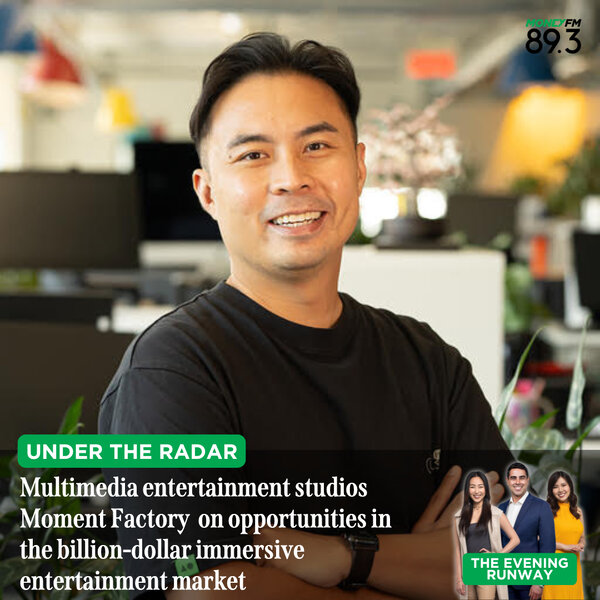
If you’ve been to the newly revamped Changi Airport Terminal 2, you’ve would’ve noticed this landmark feature located at the heart of the departure hall.
Does an immersive digital waterfall ring a bell? Called The Wonderfall, the 14-metre tall digital waterfall is a piece of digital art and is said to be the result of a highly creative and technical challenge.
The LED wall, for one thing, is made up of close to 900 flat and flexi-curve tiles, which blends seamlessly with the vertical green wall and the facade of the airport terminal. Along with piano music and sounds of the waterfall rush, the Wonderfall was quite the spectacle.
But ever wondered who are the ones behind such digital entertainment experiences combining video, lighting, sounds and special effects? Well, that’s exactly who we’re going to talk to for today.
Founded in 2001, our guest Moment Factory is a multimedia entertainment studio that specialises in the conception and production of immersive environments for its customers in public spaces.
The Montreal-headquartered firm has a geographical presence in major cities such as Paris, Tokyo, New York and Singapore. It serves some of the world’s largest companies such as Microsoft, Billie Eilish, Changi Airport, the NFL, Madonna, the City of Barcelona, Sony and cruise operator Royal Caribbean, and is behind some of the most notable installations like Las Vegas Sphere.
But how would the firm define its value proposition given such a diverse customer base?
Meanwhile, Grand View Research estimates the global immersive entertainment market to grow at a CAGR of 24.6% from 2024 to 2030 to reach US$426.77 billion by 2030. But where does digital immersive experience fit within the market, and what will be the key drivers of growth for Moment Factory?
On Under the Radar, The Evening Runway’s finance presenter Chua Tian Tian posed these questions to Danny Tan, Singapore-based Managing Producer, Moment Factory.
|
|
|
|
|
26:40
|
AUG 27, 2024
27/08/24 - Under the Radar: What is Stripe’s take on the fragmentation of the APAC payments landscape?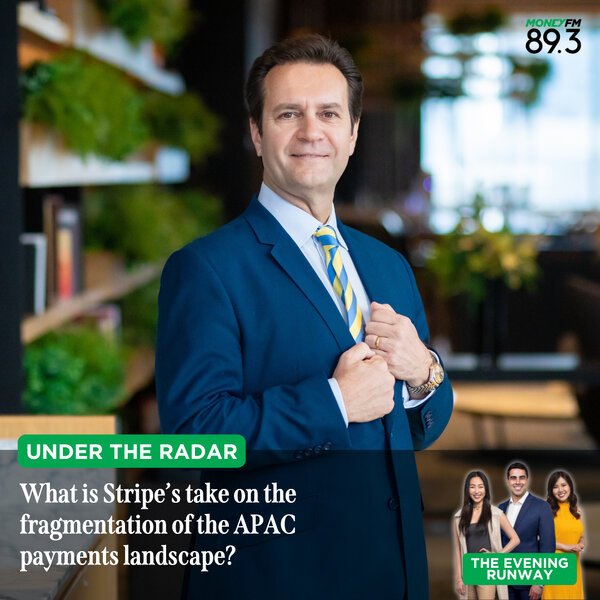
Today we’re going to talk about a company whose mission is to increase the GDP of – not a country or city – but the internet.
Founded in 2010, our guest Stripe is a technology company that prides itself on building the economic infrastructure for the internet.
With dual headquarters in San Francisco and Dublin, and offices dotted across major financial hubs such as London, Tokyo and Singapore, the firm assists customers from the world’s largest enterprises to budding startups in accepting payments, growing their revenue and tapping new business opportunities.
That means its suite of products and services cuts across a number of functions, from pricing, billing, checkouts, payment links, revenue recognition, to invoicing and even marketplace solutions.
The firm said over 100 industry leaders process more than US$1 billion on its platform annually, while over US$817 billion in payments were processed by businesses on the platform in 2022. In Singapore specifically, the firm works with some of the fastest growing players including Grab and Carousell.
Now, why are we speaking to Stripe you might ask? Well, the internet or the digital economy is an interesting one to look at, with the digital economy in ASEAN alone widely tipped to grow to US$1 trillion by 2030.
But where are the opportunities within the broader APAC region? And more importantly, what are the complexities involved in capturing them given how fragmented the payment landscape is here? Not to throw in the cost of compliance as well?
Meanwhile, the Stripe is also seeing a number of developments of late. It had in April raised US$694.2 million in a tender offer, giving the fintech player a 30 per cent higher valuation amid the cooler funding climate. The move is said to allow employees to cash out their share compensation without an IPO. But is the firm ready for an IPO anytime soon?
Meanwhile, Stripe had also in July this year acquired its competitor Lemon Squeezy. But what was the rationale behind the move?
On Under the Radar, The Evening Runway’s finance presenter Chua Tian Tian posed these questions to Paul Harapin, Chief Revenue Officer, Asia Pacific & Japan, Stripe.
|
|
|
|
|
33:02
|
AUG 23, 2024
23/08/24 - Under the Radar: AVEVA on acquisition by Schneider Electric, new “CONNECT” industrial intelligence platform, opportunities in Southeast Asia
It is all about helping enterprises extract value through digital transformation as we speak to a company said to be a global leader in the industrial software space.
With over 6,400 employees, 5,000 partners and 5,700 certified developers, our guest is Cambridge headquartered software development firm AVEVA. The firm prides itself on sparking ingenuity to drive the responsible use of the world’s resources.
Its industrial cloud platform and applications are said to assist businesses in harnessing the power of information, and better collaborate with stakeholders such as customers, suppliers and partners.
These include providing clients with a Digital Twin for the whole asset lifecycle from Engineering through to Operations and Maintenance across diverse industries.
So far, AVEVA serves over 20,000 enterprises across more than 100 countries, helping them deliver life’s essentials such as safe and reliable energy, food, medicines, infrastructure and more. Its valuation – well, above 10 billion British pounds.
But why are we talking to AVEVA you might ask, well, the firm had in January 2023 announced the completion of its acquisition by Schneider Electric.
The move was said to help the firm accelerate its transition into a subscription-only business model and become the number one Software-as-a-Service (or SaaS) provider of software and industrial transformation.
But how far has that played out in terms of R&D investments and support from Schneider Electric?
Meanwhile, AVEVA had in April 2024 unveiled an artificial intelligence powered industrial intelligence platform called CONNECT to form an ecosystem for innovation. But what does that mean in layman terms?
It had also in June 2024 teamed up with IN-CORE Systemes to make Electric Vehicle battery production more efficient. But what can we expect on this front?
On Under the Radar, The Evening Runway’s finance presenter Chua Tian Tian posed these questions to Shashank Luthra, Vice President, South East Asia at AVEVA.
|
|
|
|
|
33:40
|
AUG 21, 2024
21/08/24 - Under the Radar: Why is Glico so focused on making nut-based confectionery?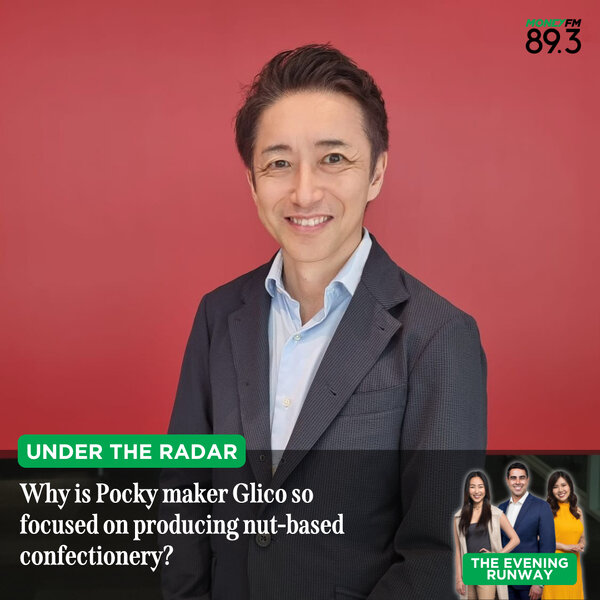
If you have been to Osaka, you would probably know who our guest is for today. After all, the company is behind the running man signage overseeing the Dotombori canal and a must-see attraction when visiting the city.
Founded 102 years ago in 1922, Glico Group is best known as a confectionery maker behind brands such as Pocky, Pretz and Pejoy. But did you know that there is a heartwarming story behind how the products came about?
Well, back in the days, the firm’s founder Riichi Ezaki had a son who was unwell. To improve the health of his son, Ezaki tested and confirmed the presence of a significant amount of glycogen in a sample of oyster broth.
That was in the early 1900s so you can imagine that glycogen was a substance that was still relatively unknown. Well, Ezaki fed glycogen to his sickly son, who eventually became healthy.
And it was this desire to use glycogen in confectioneries and enhance human health that lays the foundation for Glico.
Today, the firm’s portfolio has expanded beyond brands like Pocky to look at ice-cream products, baby formula, milk products, desserts, food ingredients, as well as raw materials for cosmetic and health products.
But even as the firm grows over the years, its focus on research and development and focus on health continues to be a key part of its value proposition. But how far has this emphasis on R&D and human health set the firm apart from the competition?
Speaking of which, the firm appears to be setting its sights on using more nuts for its products. For one thing, Glico Manufacturing Indonesia, which is the largest Glico plant and exporter to North America Markets, now produces Pocky Crushed Nuts for ASEAN markets. But how far is the ingredient key for Glico’s future success?
On Under the Radar, The Evening Runway’s finance presenter Chua Tian Tian posed these questions to Hideaki Nagahisa, Chief Operating Officer, Glico Asia Pacific.
|
|
|
|
|
24:54
|
AUG 8, 2024
08/08/24 - Under the Radar: How did Singapore’s oldest Hainanese coffee shop brand thrive while retaining a slice of Singapore’s past over the years? GM of Killiney International spills the coffee.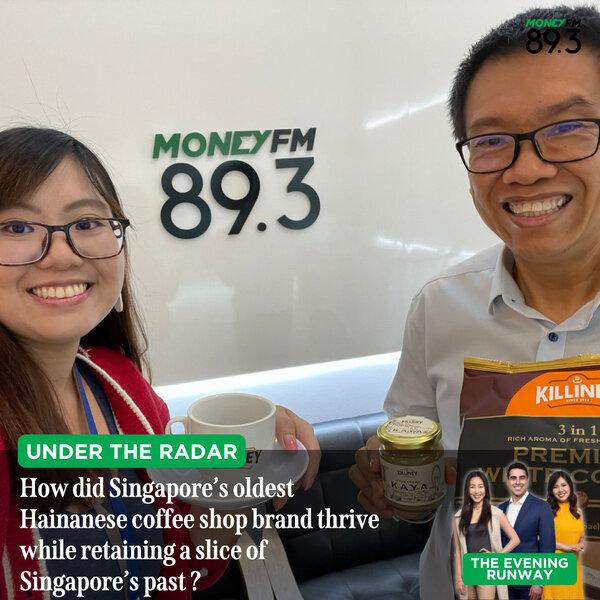
With Singapore’s 59th birthday right around the corner, we want to bring you a National Day special of “Under the Radar” where we speak to a homegrown heritage brand that you’ll come into contact with on a day-to-day basis.
Make a guess – this company is also said to be the oldest Hainanese coffee shop brand in Singapore. Established in late 1919 along the busy streets of Killiney Road, our guest for today is none other than – well — F&B operator Killiney!
But there’s a story behind how Killiney Kopitiam came about. The coffee shop was founded as Kheng Hoe Heng Coffeeshop back in the day, serving well-brewed coffee and tea and charcoal-grilled bread toast.
The traditional breakfast fare stole the heart of one regular customer called Mr Woon, who loved it so much that he finally bought the shop in 1993, renovated it, and called it ‘Killiney Kopitiam’.
But despite major renovations, the new owner believed in upholding the legacy of the previous owner, as well as the traditional working style and influence of the coffee shop. The focus remains on making good kaya, bread toast, coffee and tea, even as the brand scales and modernises.
Today, the Killiney Group has grown to a presence of about 50 outlets worldwide, and even moved into the FMCG merchandise business selling ready-to-cook food paste and instant beverages under the same heritage brand.
Now, we’re talking to Killiney Kopitiam not only because the old-school coffee shops are not only one close to our hearts, but also because the trade is also fading away from modern Singapore.
According to a Business Insider article in January this year citing Singapore’s Housing Development Board, only 776 coffee shops remain, down from the over 2,000 traditional coffee shops back in the 1950s. So what was Killiney Kopitiam’s recipe to thrive over the years, all while retaining a slice of Singapore’s past?
Meanwhile, what is the company doing to bring a slice of Singapore abroad to other international markets such as the US?
On Under the Radar, The Evening Runway’s finance presenter Chua Tian Tian posed these questions to Henry Oh, General Manager, Killiney International.
|
|
|
|
|
38:44
|
AUG 6, 2024
06/08/24 - Under the Radar: From gas cylinders to EV charging – Union Gas Holdings on diversifying service offerings as customers tap the electrification trend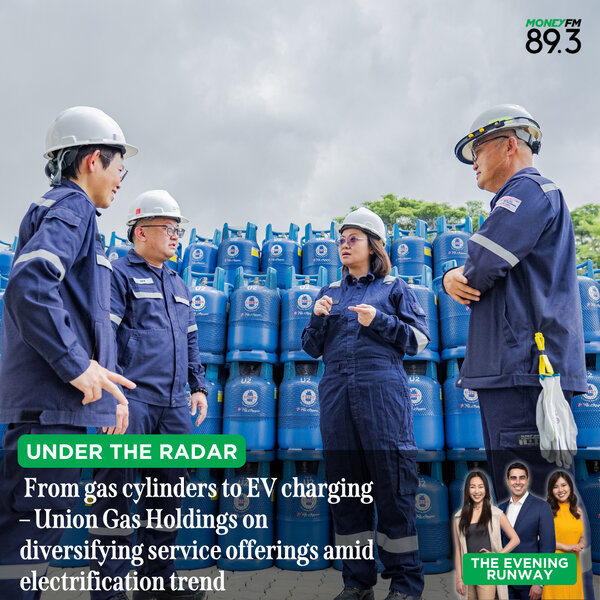
Remember the days when the gas delivery man would come to our homes to switch out our gas tanks or gas cylinders?
That’s probably becoming a thing of the past, making today’s “Under The Radar” conversation all the more meaningful.
With over 40 years of operating track record, our guest Union Gas Holdings is an established provider of fuel products in Singapore. The company's key businesses consist of Retail Liquefied Petroleum Gas, Compressed Natural Gas and Diesel.
The SGX mainboard listed company is also said to be one of the leading suppliers of liquefied petroleum gas in Singapore.
It has a fleet of over 200 vehicles serving more than 200,000 domestic households as well as commercial entities such as hawker centres, eating houses, coffee shops and commercial central kitchen.
Assets-wise, the Group owns LPG storage depots as well as two out of four bottling LPG bottling plants in the island, giving it full control of the supply chain from procurement to bottling, storage, distribution, wholesaling and retailing.
Union Gas is an interesting company to look at particularly as households and F&B operators increasingly hop onto the green bandwagon, opting for electric stoves versus using gas stoves.
What does this mean for the firm when it boils down to demand for gas cylinders and cooking gas, and how is it switching up its portfolio offerings to prepare for a cleaner future?
Speaking of which, Union Gas Holdings had in April this year expanded its offerings to provide electric vehicle charging services through a partnership with Hong Kong-based charging service provider Deltrix. But what can we expect on this front?
Also – how will moving away from traditional fuel sources also help the firm mitigate volatilities with oil and gas prices given ongoing geopolitical tensions in key supply markets?
On Under the Radar, The Evening Runway’s finance presenter Chua Tian Tian posed these questions to Alexis Teo, General Manager, Union Gas.
|
|
|
|
|
23:54
|


